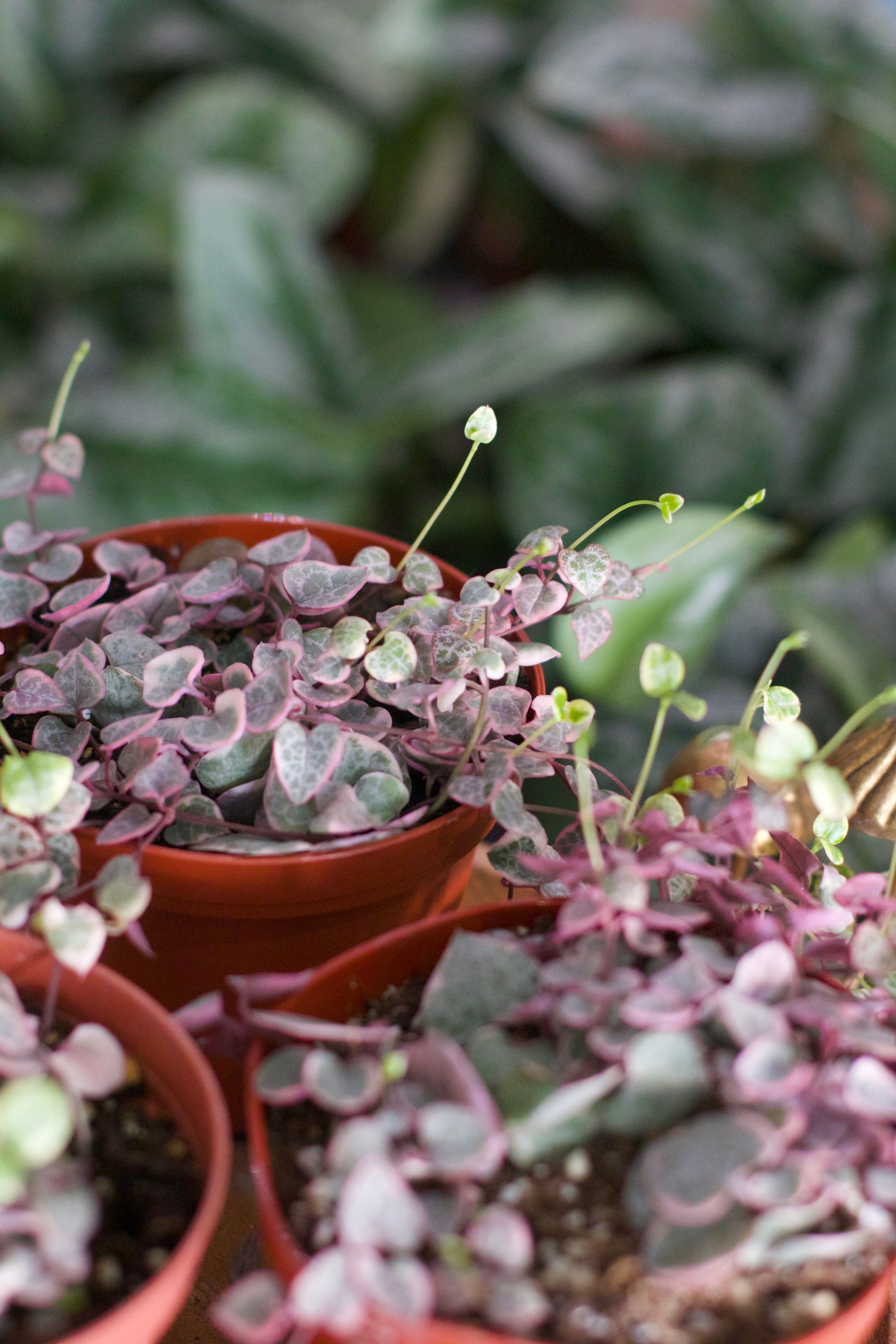
The String of Hearts is one of the most romantic and fast-growing trailing plants you can add to your collection. Featuring delicate, heart-shaped leaves marbled with silver and deep purple undersides, its beautiful vines can cascade several feet down from a shelf or hanging basket.
At Over Grown, we adore String of Hearts for its delicate appearance paired with surprisingly tough, semi-succulent resilience. While it shares many care habits with other trailing succulents, its delicate crown and thin stems make for some slight changes in care techniques.
Essential String of Hearts Care Requirements
String of Hearts Lighting
Native to South Africa, String of Hearts loves plenty of bright light to keep its heart-shaped leaves plump, colorful, and closely spaced along the vines.
- Ideal light conditions: Bright, indirect light with a few hours of soft morning sun is ideal. A spot right in an east or west-facing window works beautifully.
- Sunlight on the crown: Make sure direct light hits the top surface of the pot. If the crown stays in dark shade while the vines trail into light, the top leaves will drop off, leaving you with bare, spindly vines near the soil.
- Vibrancy check: Bright light brings out the deep purple undersides and bold silver patterning on the leaves.
- Signs of improper light: Pale leaves, wide gaps between the hearts, or loss of silver mean your plant is craving a brighter window.
String of Hearts Watering
Because String of Hearts grows from small, potato-like tubers nestled right at the soil surface, top-watering can trap moisture around the delicate crown and cause fast rot. Bottom watering is the single best way to water this plant.
- How to bottom water: Set your nursery pot into a tray, dish, or sink with a couple inches of lukewarm water. Let it sit for 15-20 minutes until the top of the soil feels slightly cool and damp to the touch, then lift the pot out and let all excess water drain thoroughly before hanging it back up.
- How often to water: Allow the soil to dry out at least 80–100% between waterings.
- The "Bend Test": Gently squeeze a mature leaf near the base of the pot. If it feels firm and rigid, hold off. If the leaf feels soft, pliable, or slightly wrinkled, it’s ready for a bottom-watering soak!
String of Hearts Soil and Fertilization
String of Hearts roots are delicate, shallow, and highly susceptible to suffocating in heavy potting soil.
- Potting medium: An ultra-gritty, fast-draining cactus and succulent mix is best. We recommend and use Rosy’s Cacti and Succulent Mix here at the shops.
- Fertilizing: Feed lightly every 4-6 weeks during spring and summer using a balanced, diluted liquid fertilizer. Adding a few drops of our liquid fertilizer to your bottom-watering tray is a gentle, effective way to nourish the plant.
String of Hearts Humidity & Leaf Care
While they tolerate typical home humidity, String of Hearts plants thrive best when given dry air and good ventilation.
- Humidity preferences: Normal home humidity is completely fine for these plants. They do not want high humidity or misting, which traps moisture around the foliage and invites fungal issues.
- Avoid tangles: String of Hearts vines love to hook onto one another with their leaf pairs. When moving or dusting the plant, gently untangle the strands rather than pulling them, which can snap the wiry stems.
String of Hearts Pests and Treatment
Because of their dense, overlapping vines, pests can occasionally hide under the leaves if air circulation is low.
- Common Pests: Mealybugs (cottony white tufts) are the most common culprit, hiding under the heart leaves or around the surface.
- Treatment: Isolate the plant immediately. Spot-treat clusters with a cotton swab dipped in rubbing alcohol, or give the vines a gentle, thorough misting with our Plant Protect Spray. For more identification and treatment tips, visit our blog, ‘Identifying & Treating Houseplant Pests.’
Common Problems and Solutions
String of Hearts gives clear clues when its environment needs a slight tweak.
Bald or Sparse Top of the Pot
- Causes: Lack of direct overhead light on the crown, or top-watering that rotted the upper tubers.
- Solutions: Move the plant so light hits the top surface directly. To fix balding, take healthy trailing strands, coil them around the top of the bare soil, and pin them down using small U-pins, they will root at the nodes and fill the top back in! For more on this method, visit our blog, ‘Pinning Trailing Plants’.
Soft, Translucent, or Yellow Leaves
- Causes: Overwatering, soil that stays wet for too long, or watering from the top repeatedly.
- Solutions: Switch immediately to bottom watering and let the soil dry out completely. Cut back any yellowing or mushy stems near the base.
Thin, Paper-Dry Leaves
- Causes: Severe underwatering or a dry root system that hasn't received a full soak.
- Solutions: Give the pot enough time when bottom-watering to ensure the full root system rehydrates.
String of Hearts Care for Beginners: A Summary
How to keep your cascading hearts full and vibrant:
- Lighting: Give it bright, indirect light - making sure sunlight reaches the top of the pot.
- Watering: Bottom water only when the soil is completely dry and the mature leaves feel soft and pliable.
- Soil: Plant in a gritty, fast-draining succulent mix with excellent drainage.
Stop by our Westerville or Dublin boutiques to explore our current trailing collection!
We hope this guide helps your String of Hearts trail beautifully for years to come! For more expert plant care guides, sign up for our newsletter below.