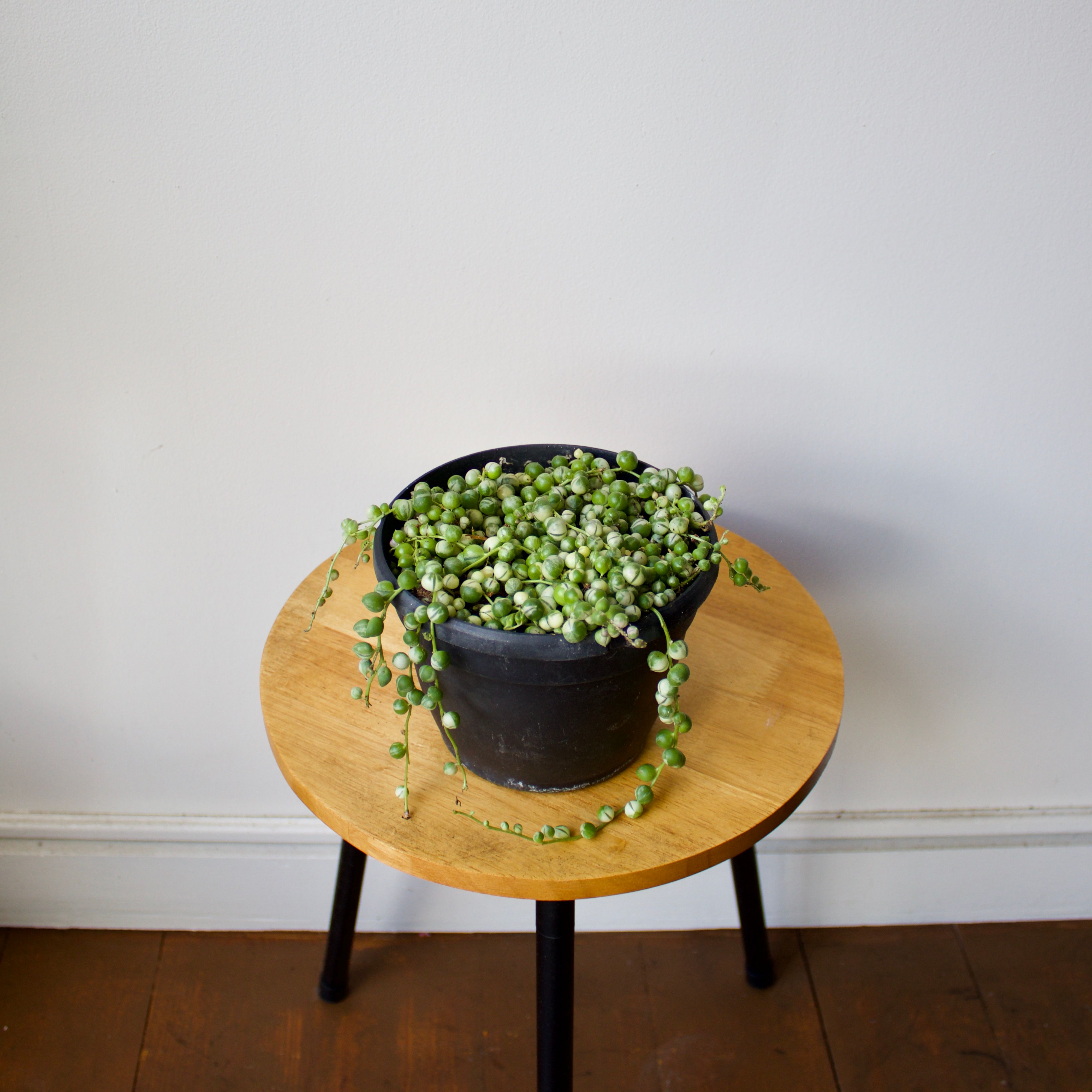
The String of Pearls and String of Dolphins are two of the most iconic trailing succulents in the plant world. Famous for their cascading, bead-like or dolphin-shaped foliage, these plants bring a whimsical charm to shelves and hanging baskets.
At Over Grown, we adore these succulent strings for their delicate shapes and fast growth when given the right conditions. While they have a reputation for being a bit finicky, mastering their care comes down to understanding two key factors: maximum light on top and proper succulent watering mechanics.
Essential String of Pearls & Dolphins Care Requirements
Lighting
Unlike many tropical houseplants, succulent strings are native to dry, sunny environments in southern Africa. They crave intense light to keep their leaves plump and tightly packed along the stems.
- Ideal light conditions: Bright, direct light to very bright indirect light is crucial. A sunny south or west-facing window sill is ideal.
- The top-of-the-pot rule: Ensure the top of the pot receives direct sunlight, not just the trailing vines hanging down. If the crown of the plant stays in the shade, the top stems will thin out, which can make it look bald over time.
- Avoid: Low-light rooms, deep interior shelves, or north-facing windows. Without enough sun, the vines will become thin and leggy.
- Signs of improper light: Long gaps between pearls or flattened dolphin leaves mean the plant needs a much brighter spot.
Watering
As true succulents, String of Pearls and String of Dolphins store water inside their fleshy leaves. Overwatering is the single fastest way to lose these plants.
- How often to water: Allow the soil to dry out completely between waterings. When you do water, soak the soil thoroughly until water runs out the drainage holes.
- Read the leaves (The Squish Test): Don't rely on a calendar, look at the foliage! When these plants are thirsty, the leaves will feel slightly soft and pliable rather than firm and plump.
- Avoid: Watering on a strict schedule or letting the pot sit in a saucer of standing water.
- Signs of improper watering: Mushy, yellow, or translucent beads that pop easily indicate severe overwatering and root rot. Shriveled, dry, brown foliage means it’s time for a deep drink.
Soil and Fertilization
Because these plants are prone to root rot if their delicate, shallow roots stay wet for too long, a well draining mix is a must.
- Potting medium: An ultra-gritty, fast-draining cactus and succulent mix is best. We recommend and use Rosy’s Cacti and Succulent Mix here at the shops.
- Fertilizing: Feed lightly during the active spring and summer growing season with a balanced, diluted succulent fertilizer every 4-6 weeks. Our liquid fertilizer drops diluted in your watering can will keep them growing happily without burning their roots.
Humidity & Leaf Care
Unlike tropical houseplants, succulent strings thrive in dry, low-humidity indoor environments.
- Humidity preferences: Normal home humidity is completely fine for these plants. They do not want high humidity or misting, which traps moisture around the foliage and invites fungal issues.
- Mind the airflow: Good air circulation around the pot helps the topsoil dry out efficiently after watering.
- Clean the foliage: Avoid spraying the foliage with water. If dust builds up, use a soft brush to gently sweep away debris from between the beads/dolphins.
Pests and Treatment
While fairly pest-resistant due to their tough skin, dense clusters of succulent vines can occasionally hide unwanted visitors.
- Common Pests: Mealybugs (cottony white webs) love to hide in the tight crevices where the pearls connect to the stem.
- Treatment: Isolate the plant immediately. Spot-treat mealybugs directly with a cotton swab dipped in rubbing alcohol, or give the plant a thorough application of our Plant Protect Spray. For more identification and treatment tips, visit our blog, ‘Identifying & Treating Houseplant Pests.’
Common Problems and Solutions
Succulent strings give clear visual signals when their environment needs a quick adjustment.
Balding or Thinning at the Top
- Causes: The top of the pot isn't getting enough direct sunlight, or water sat on the crown and rotted the top roots.
- Solutions: Move the plant so light hits the top surface directly. To fix balding, take healthy trailing strands, coil them around the top of the bare soil, and pin them down using small U-pins, they will root at the nodes and fill the top back in! For more on this method, visit our blog, ‘Pinning Trailing Plants’.
Mushy, Translucent Pearls/Dolphins
- Causes: Classic sign of overwatering or soil that is holding onto moisture for too long.
- Solutions: Stop watering immediately and let the pot dry completely. Snip away any mushy, decayed stems. If the root system has rotted, harvest the firm, healthy vine tips to propagate in fresh, dry succulent soil.
Wrinkled, Puckered Foliage
- Causes: The plant is dehydrated and consuming its internal water reserves.
- Solutions: Check the soil. If it is bone-dry, give the plant a deep, thorough watering (bottom watering works exceptionally well for succulent strings!).
String of Pearls & Dolphins Care: A Summary
How to keep your trailing succulents plump and growing:
- Lighting: Give it intense, bright light - ensuring sunlight hits the top of the pot.
- Watering: Allow the soil to dry out completely. Water only when the foliage feels soft or looks puckered.
- Soil: Use a gritty, fast-draining cactus/succulent mix in a pot with drainage holes.
Stop by our Westerville or Dublin shops to browse our current selection of healthy, full trailing strings!
We hope this guide helps your strings stay lush and cascading! For more expert plant care guides and shop updates, sign up for our newsletter below.