Dark leaves look like they belong in a dark corner. Only some of them agree.
As October brings overcast skies and shorter autumn days to Central Ohio, moody, near-black houseplants take center stage. Their deep purple and burgundy foliage brings a cozy, dramatic atmosphere to any room. But one of the biggest autumn plant traps is assuming that a dark plant naturally wants a dark spot in your home.
In reality, leaf color is not an indicator of how much shade a plant can tolerate. Knowing which dark-leafed beauties can handle a cozy interior corner, and which ones are sun lovers is the key to keeping your moody indoor jungle thriving all season long.
Why Dark Leaves Actually Happen
In the wild, plants develop deep red, purple, or near-black foliage for very specific evolutionary reasons:
- Anthocyanin production: Plants produce dark pigments called anthocyanins to protect their delicate leaf tissues from intense sunlight, acting like a natural sunscreen.
- Maximizing light absorption: In deep rainforest understories, dark undersides and rich pigments help leaves trap and recycle limited light rays filtering down through the thick canopy.
- New growth protection: Many tropicals push out dark burgundy or near-black new leaves to ward off pests and prevent sun scorch while the leaf tissue is still soft and developing.
Because dark leaves serve different functions depending on where the plant originated, their light requirements vary dramatically.
Our Dark Foliage Favorites: Who Needs What?
ZZ Raven
- The vibe: Sleek, glossy, near-black fronds that emerge vibrant bright green before darkening into a dark sheen.
- Light requirements: True shade tolerance. While it grows faster in bright indirect light, ZZ Raven is one of the very few dark plants that will happily thrive in lower-light corners.
- Fall care: It stores water in underground potato-like rhizomes, meaning it needs very little water as Ohio days shorten. Let the soil dry out 100% before watering.
Alocasia Black Velvet
- The vibe: Thick, velvety, almost pitch-black heart-shaped leaves highlighted by striking silver-white veins.
- Light requirements: Bright, indirect light is non-negotiable. Placing this dark beauty in a dim corner will cause it to drop its lower leaves and stall out completely.
- Fall care: Keep it close to an east or west-facing window, and run a nearby humidifier once your home's furnace kicks on to protect those velvety leaves.
Red Maranta
- The vibe: Deep olive-green leaves patterned with rich burgundy undersides and bright red veins that fold up like praying hands at night.
- Light requirements: Medium to bright indirect light. It loves soft, ambient light, too much direct sun will bleach its deep red patterning, while too little light causes the stems to stretch and get leggy.
- Fall care: Marantas have fine roots that love consistent, light moisture. Bottom watering works exceptionally well to keep the foliage happy without disturbing the delicate roots.
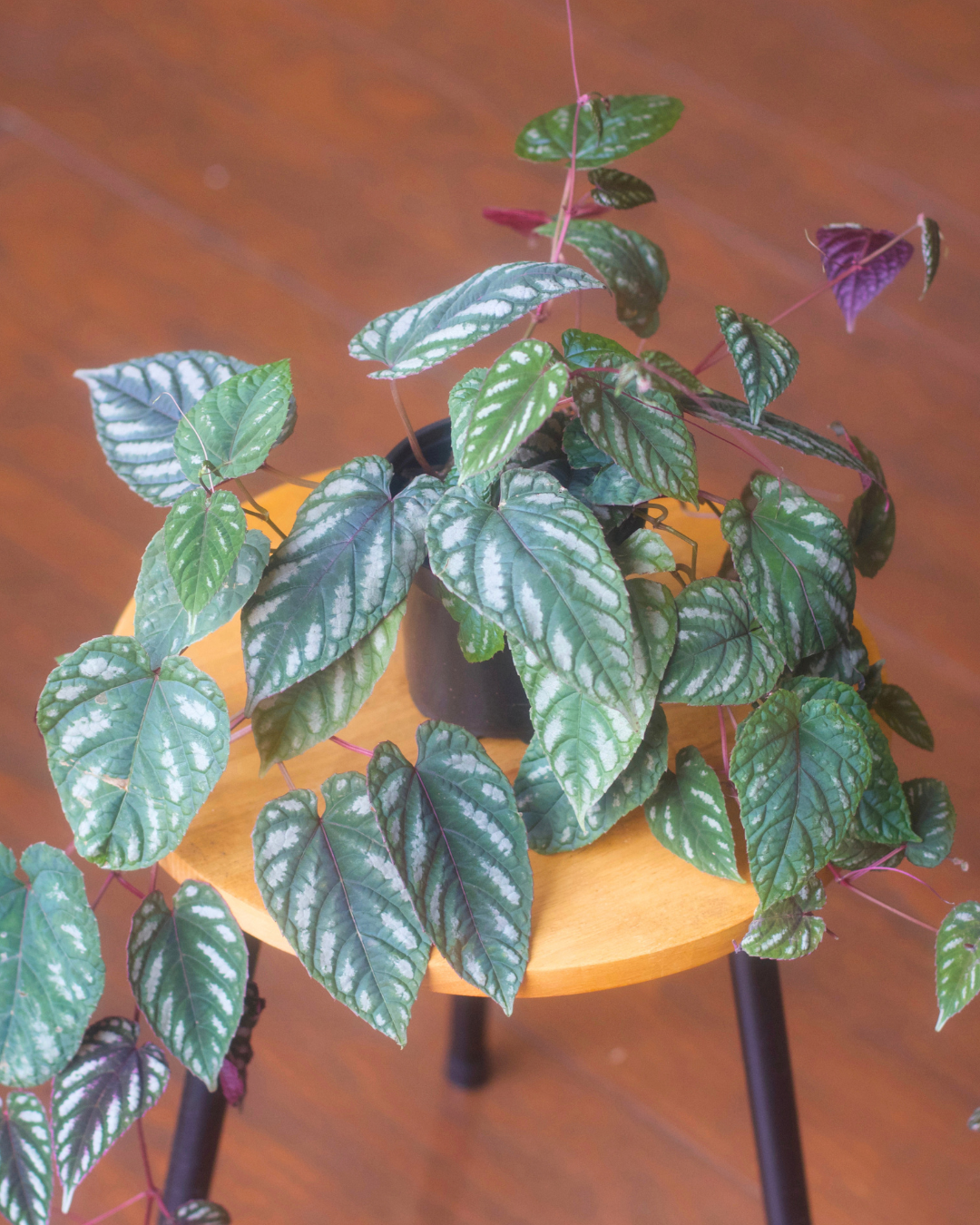
Cissus Discolor
- The vibe: Dramatic, spade-shaped leaves painted in silver and deep green on top, with a rich, velvety dark-purple underside and red climbing tendrils.
- Light requirements: Bright indirect light. To maintain its vivid purple undersides and silver iridescence, it needs plenty of ambient natural light.
- Fall care: Native to tropical forests, it is sensitive to cold Ohio drafts and dry air. Keep it far away from entryways and radiator vents.
Philodendron Black Cardinal
- The vibe: Large, leathery leaves that emerge as a deep burgundy-black before maturing into a glossy darker color.
- Light requirements: Medium to bright indirect light. Ample light encourages the plant to produce darker, richer burgundy leaves on its newest growth.
- Fall care: Wipe down its broad leaves every few weeks to clear off autumn dust so it can absorb maximum light during shorter days.
Placing Dark Plants in the Home as Days Shorten
Between October and November in Columbus, our daylight hours drop significantly, and the sun sits much lower on the horizon.
- Move light-loving dark plants closer to windows: Plants like Black Velvet Alocasias and Philodendron Black Cardinals should be shifted directly into the brighter indirect light spots in your home (such as south or west-facing rooms).
- Save low-light spots for true low-light varieties: Reserve your dim coffee tables, interior bookshelves, and entryways exclusively for low-light resilient options like ZZ Raven or classic Snake Plants.
- Watch the drafts: Keep all "dramatic" tropicals away from drafty windows and floor heat vents, which dry out dark foliage and cause crispy leaf tips.
Styling Dark Foliage for Fall
Moody plants are incredible design elements that add instant depth and contrast to indoor spaces:
- Pairing with pots: Contrast near-black foliage like ZZ Raven or Black Cardinal against light-colored terracotta, cream ceramic, or raw concrete planters to make the dark leaf silhouettes pop.
- Group with lighter foliage: Place a dark Alocasia or Maranta next to bright lime-green plants (like a Neon Pothos or Lemon Lime Philodendron) to create a striking color contrast on your plant shelves.
- High-shelf cascades: Position trailing dark foliage like Cissus discolor on elevated shelving where light can catch the rich purple undersides of the leaves.
Need Help Finding the Perfect Moody Addition?
Looking to add a touch of gothic drama to your plant collection this fall? We are here to help you pick the right variety for your exact light setup!
Stop by our Westerville or Dublin boutiques to explore our current selection of dark-leafed tropicals, chat with our team about seasonal placement, or find the perfect pot to pair with your new autumn centerpiece.