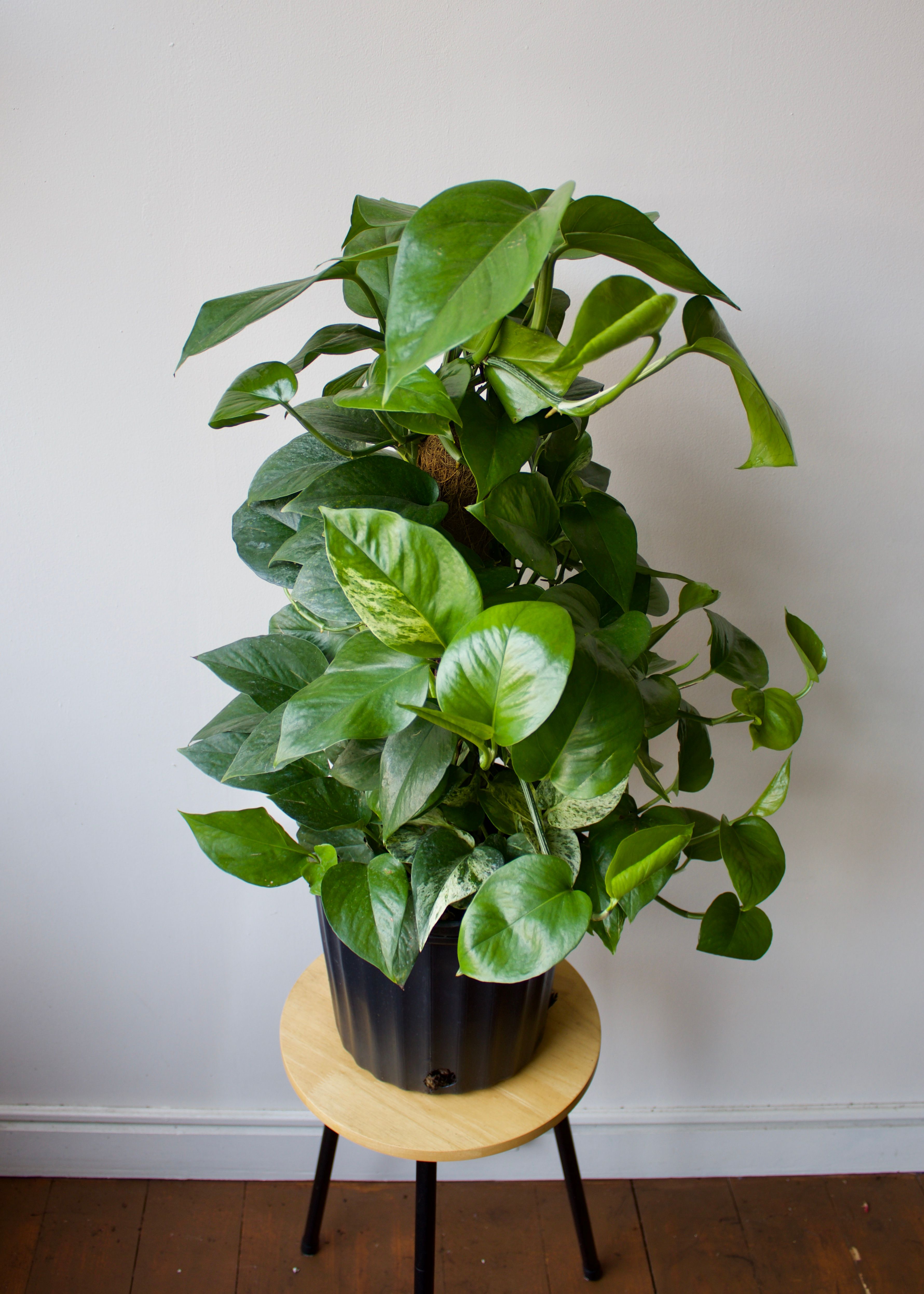
If you own climbing houseplants, you’ve likely noticed them sending out long brown stems that reach into the air. Those are aerial roots, and they are your plant’s way of signaling that it is looking for something to climb!
In their native habitats, tropical vining plants don't grow downward. They germinate on the forest floor and immediately move toward the nearest tree trunk, climbing upward into the canopy to reach more light. When we grow them indoors and let them trail over the edge of a bookshelf, we are working against their natural biology. A moss pole bridges that gap.
What a Moss Pole Actually Does
A moss pole isn’t just a fancy stake to keep a heavy plant from falling over. It serves a distinct biological function:
- Mimics Natural Bark: The damp sphagnum moss replicates the texture and moisture of a tree trunk in the wild.
- Root Anchoring: When aerial roots come into contact with the moist pole, they burrow into the moss, securing the plant and allowing it to absorb water and nutrients directly through the vine.
- Unlocks Mature Growth: Climbing vertically triggers a hormonal shift in the plant. When a vine feels physically secure and supported, it begins producing larger leaves, shorter spaces between nodes, and with plants such as Monsteras, deep splits and fenestrations.
Signs Your Plant Needs One Now
You don't need a support system for a brand-new starter plant, but you should consider installing one if you notice these three signs:
- Exaggerated Aerial Roots: The plant is throwing out long aerial roots that are searching for a surface, sometimes even attempting to attach to your drywall or baseboards.
- Stunted Leaf Size: As trailing vines get longer, the newest leaves at the tips start growing smaller instead of larger. This happens because the plant realizes it cannot support heavy foliage while hanging mid-air.
- Sprawling or Flopping: The main stems are becoming thick, heavy, and awkward, causing the plant to lean drastically to one side or spill out of its pot.
Plants That Benefit Most
Any climbing aroid will see a massive shift in growth if given a vertical support. The primary candidates include:
- Monstera Deliciosa: Their heavy, horizontal growth habit makes a sturdy support system essential to keep them manageable indoors.
- Rhaphidophora Tetrasperma: Often called the "Mini Monstera," this incredibly fast climber will quickly scale a pole and reward you with beautifully split leaves.
- Pothos & Philodendrons: While standard Pothos and Heartleaf Philodendrons trail beautifully, pinning them to a moss pole will cause their leaves to double or triple in size over a single growing season.
How to Install Without Stressing the Plant
The best time to add a moss pole is during a routine repotting session. Trying to jam a sharp stake into an already crowded pot risks slicing through the main root ball.
- Place the Pole First: Gently remove the plant from its old pot. Place your moss pole directly onto the bottom of the new, slightly larger container first.
- Arrange the Roots Around It: Situate the plant’s root ball snugly up against the base of the pole. Ensure the "back" of the plant (the side where the aerial roots emerge), is facing the moss.
- Backfill with Soil: Fill in the remaining space with a chunky, well-draining potting mix, packing it firmly around the base of the pole to anchor it securely.
- Secure the Stems: Use soft plant velcro or twine to secure the main thick stems to the pole. Do not tie down the petioles (the leaf stems), as they need to move freely to track the light.
DIY vs. Store-Bought: An Honest Comparison
Coir/Coco Poles (Store-Bought)
These are inexpensive, rigid wooden stakes wrapped in a thin layer of coconut fiber. While they are excellent for physical support, the compressed coir dries out instantly and is often too dense for aerial roots to actually penetrate. They function more like a standard trellis than a living system the roots can get into.
Real Sphagnum Moss Poles (DIY or Premium)
True moss poles consist of a plastic mesh backing stuffed tightly with loose, long-strand sphagnum moss. Because the moss stays fluffy and holds moisture, aerial roots can easily burrow inside. They require a bit more effort to build or source, but they are the only option that will actually unlock mature leaf sizes.
The Catch: Keeping It Moist
A moss pole only works if it stays damp. If the sphagnum moss dries out completely, it becomes hydrophobic, and the aerial roots inside will shrivel.
To maintain it, you'll need to slowly pour water down the top of the pole every few days, or use a misting bottle to keep the exterior damp. If your schedule doesn't allow for that extra layer of maintenance, a standard wooden trellis or a dry coco coir pole will still keep your plant upright, you just won't see the massive, oversized leaf development that a true, hydrated moss pole provides.
Ready to upgrade your climbers? Stop by the shops this week and our team can walk you through the best setup for your specific plant!
If you're looking for more expert advice, exclusive content, and a community of fellow plant lovers, be sure to sign up for our newsletter below!