Stepping into the world of houseplants can sometimes feel like trying to learn a completely foreign language. You open a care guide or talk to a plant shop team member, and suddenly you’re hearing words like nodes, fenestrations, and variegation. Learning just a handful of basic plant terms will help you decode care tags, propagate your favorite vines with total confidence, and spot exactly what your plants are trying to tell you. Here is a simple breakdown of some of the foundational plant terms every beginner should know.
1. Node
If there is one term to learn first, it’s this one. A node is the small, raised bump, or joint on a stem where leaves, stems, and roots originate. It acts as the "growth engine" of the plant where natural growth hormones are concentrated.
- Why It Matters: When you take a cutting to propagate in water, it must include a node. If you simply snip off a leaf without the node attached, it will sit in water without ever growing new roots or shoots.
2. Fenestration
Fenestrations are the natural holes, splits, or cuts that develop in a leaf as the plant matures (most famous in the Monstera deliciosa). In tropical rainforests, these splits allow heavy wind and rain to pass through the canopy without tearing the massive leaves, while letting light reach the lower foliage.
- Why It Matters: Young Monsteras start with solid, heart-shaped leaves. Fenestrations are a sign of a happy, maturing plant! If your Monstera isn't producing splits, it’s usually signaling that it needs more bright, indirect light.
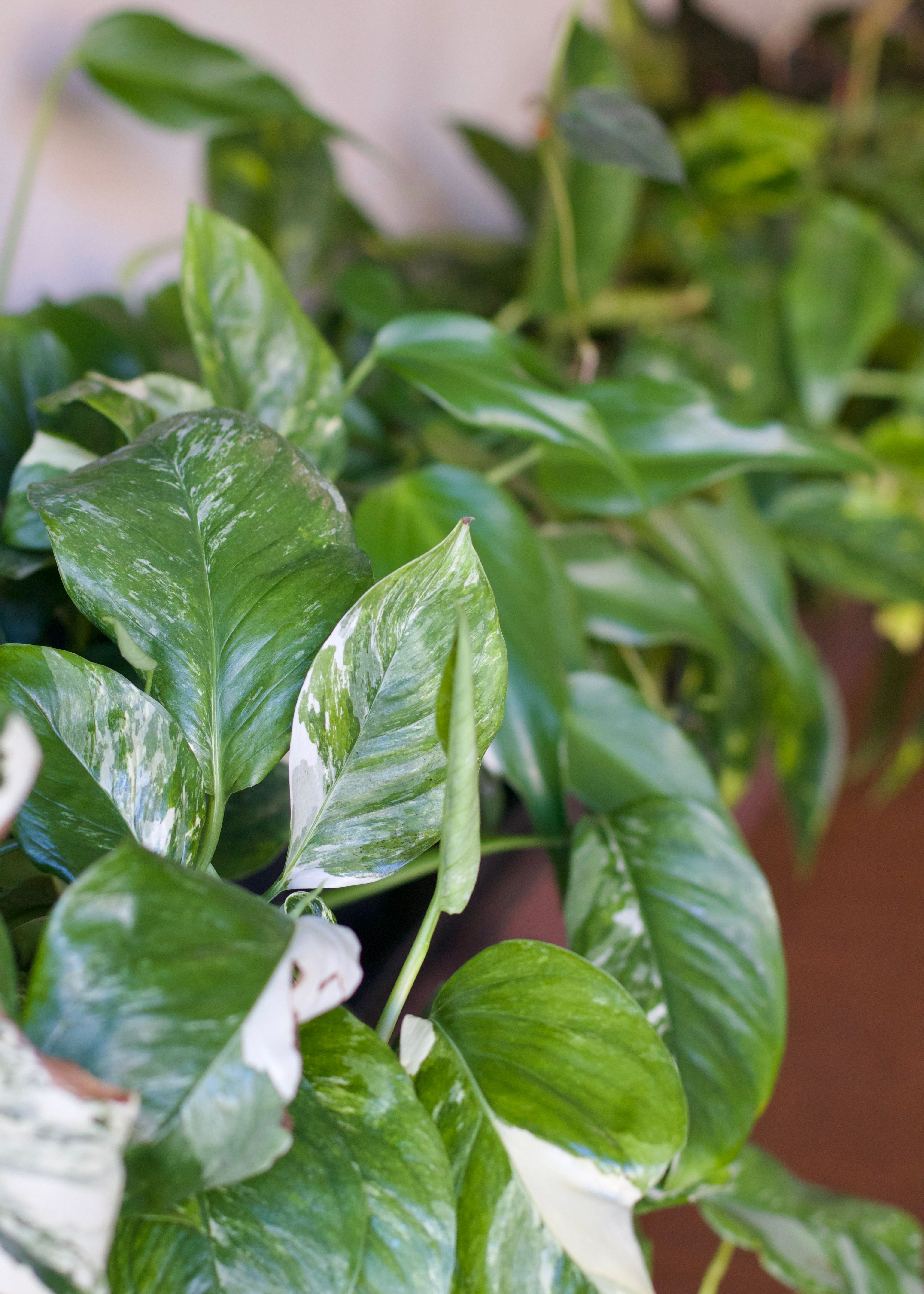
3. Variegation
Variegation refers to leaves that feature multiple colors. This typically is patches, streaks, or marbling of white, cream, yellow, or pink alongside the standard green. This occurs when certain plant cells lack chlorophyll (the green pigment that absorbs light).
- Why It Matters: Variegated leaves have less chlorophyll to process sunlight, meaning variegated plants generally grow a bit slower and need slightly more light than their solid-green cousins to maintain their striking patterns.
4. Aerial Roots
Unlike roots that anchor deep in soil, aerial roots grow above the ground directly from nodes along the stem. In the wild, climbing tropicals (like Monsteras and Philodendrons) use these roots to grip onto tree trunks and absorb atmospheric moisture and nutrients.
- Why It Matters: Don't panic if you see brown, woody, rope-like roots growing out of your stems into mid-air! You can gently tuck them back into the soil, let them drape naturally, or train them to climb up a moss pole.
5. Petiole
A petiole is the leaf stem, the small stalk that connects a leaf blade to the main stem of the plant. Think of it as the arm that holds the leaf out to catch sunlight.
- Why It Matters: Knowing where the leaf ends and the petiole begins prevents common care mistakes! For example, when planting a cutting or repotting, burying the petiole too deep in the soil can trap moisture around it and cause the leaf to rot right at the base.
6. Root-Bound
A plant becomes root-bound (or pot-bound) when its root system has grown so large and dense that it completely fills the container, leaving very little soil behind to retain water or nutrients. You’ll often see roots tightly spiraling around the base or poking out through the drainage holes.
- Why It Matters: While a few species actually prefer snug roots, severe root-binding halts growth and causes the plant to dry out almost instantly after watering. It’s a clear signal that it’s time to step up into a container 1 to 2 inches larger.
7. Bottom Water
Bottom watering is the method of placing a pot into a shallow sink, tray, or bowl filled with water, allowing the soil and roots to draw moisture upward through the bottom drainage holes.
- Why It Matters: It ensures the entire root zone gets fully saturated without washing away topsoil or compacting the dirt. Plus, keeping the top layer of soil dry is one of the best natural ways to prevent fungus gnats from laying eggs! Some plants also prefer this method of watering to ensure the foliage is not getting wet and sitting in moisture.
Have Questions About Your Plant's Growth?
Botanical terms are a lot easier to understand when you can see and touch them in real life!
Stop by our Westerville or Dublin boutiques anytime, if we ever use a term you are not familiar with, never be afraid to ask for clarification! Our team will gladly point out the nodes, check your root system, or help you figure out what your green friends are trying to tell you.