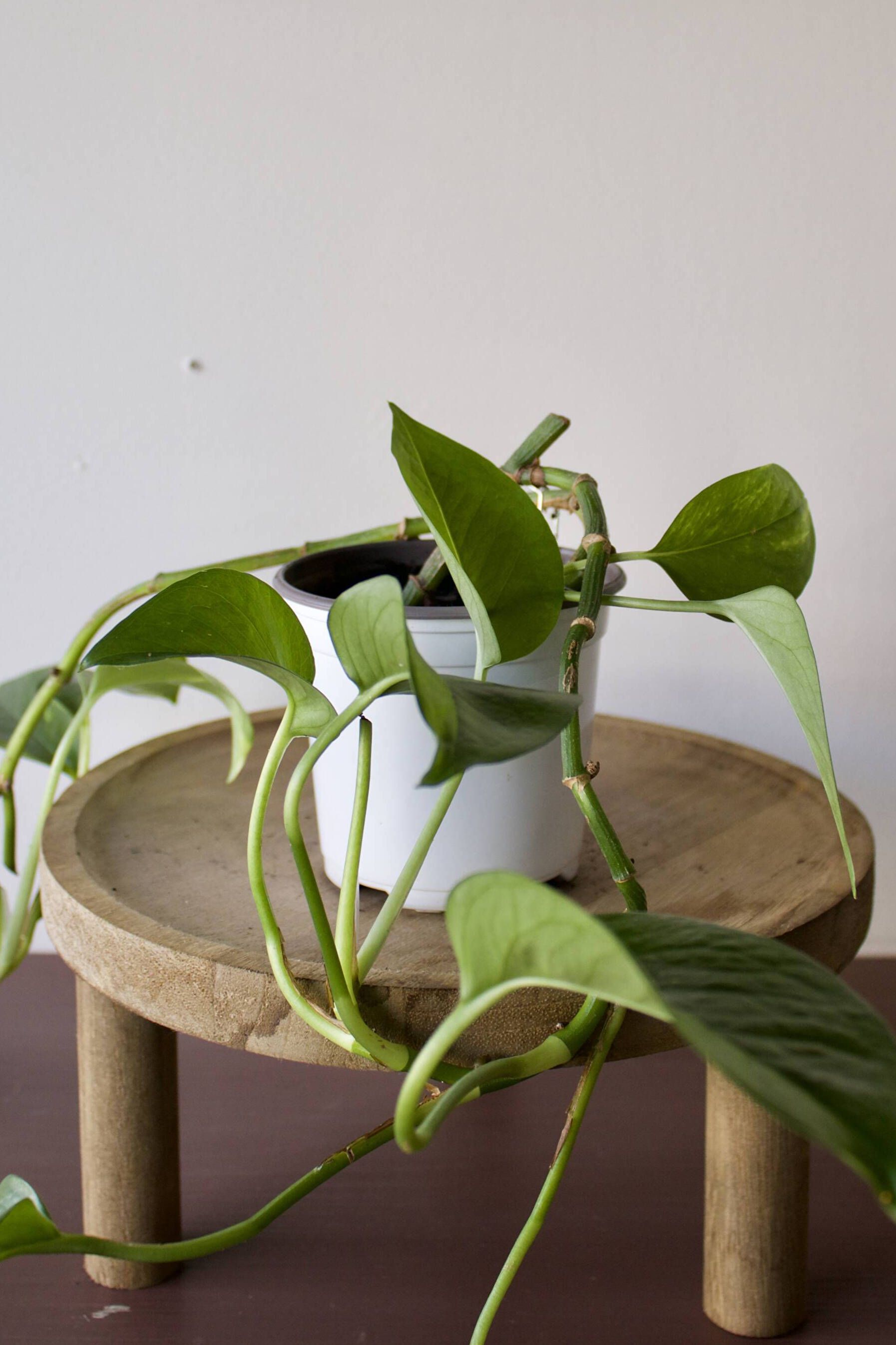
While a long Pothos is a badge of honor, there comes a point where lush turns into unmanageable. When your plant reaches this stage, you’re faced with a choice: do you trim it, tame it, or give it more room to grow? Here is how to decide the next move for your Pothos.
Length isn't the only factor. A healthy Pothos can be super long and perfectly happy. It’s "overgrown" when:
- The Balding Top: The vines are long, but the soil level looks sparse or bare.
- Yellowing Near the Base: Leaves near the pot are dropping, leaving behind naked stems.
- Water Runs Straight Through: You water it, and it immediately drains out the bottom without soaking in (a sign of being root-bound).
- Smaller Leaves: New growth at the very ends of the vines is significantly smaller than the older leaves.
If your vines are looking leggy (long spaces of bare stem between leaves), cutting it back is the best way to rejuvenate the plant.
- How: Use clean shears to cut the vine. Always leave at least one or two nodes on the stem remaining in the pot; this is where the new growth will sprout.
- When: Spring and summer are ideal, as the plant has the energy to bounce back quickly.
- Propagating Bonus: Don't toss those vines! Chop them into individual nodes and drop them in a jar of water. Within a few weeks, you’ll have a whole new batch of babies to give or keep. To learn more on how to do this successfully, visit our previous blog, Propagation 101.
If you love the length but hate the "bald" look at the top of the pot, don't reach for the scissors yet. You can pin the vines back into the soil. By securing a node directly onto the dirt with a U-pin, you encourage the vine to root in place. This fills out the top of the pot and creates a much bushier, denser appearance. Check out our full guide on this, Pinning Trailing Plants.
Sometimes the plant isn't too long, it’s just too big for its current pot. If you see roots circling the bottom or poking out of the drainage holes, it’s time to size up.
- How to Size Up: Only go up 1-2 inches in pot diameter. Putting a Pothos in a massive pot leads to excess soil moisture and root rot. Visit our previous blog, Complete Guide to Repotting Houseplants, before you get started on this.
- The Soil: Use a chunky, well-draining mix to keep those roots breathing. We carry a tropical houseplant mix in store that is perfect for this.
If you have a truly massive, struggling Pothos, you can actually perform a "triple threat" refresh. You can repot it into a slightly larger home, cut back the leggiest vines to propagate, and pin the remaining healthy vines into the new soil. Doing this in the spring gives the plant a total reset and results in a massive growth spurt by mid-summer.
- Cutting Too Close to the Soil: If you cut the vine right at the soil line, you risk damaging the main root crown. Always leave a node or two above the dirt.
- Repotting in the Dead of Winter: While Pothos are hardy, repotting during the dormant season (November-February) can cause unnecessary stress. Wait for the spring light to return!
- Ignoring the Roots: If you trim the top but the plant is severely root-bound, the new growth will still be stunted. Root health is super important.
We hope this guide provides what you need in deciding next steps for your beautiful Pothos at home. For even more common mistakes and fixes, visit our previous blog, Common Propagation Mistakes. If your Pothos is getting out of hand, and you are unsure of how to help it, bring a photo into the shop and our team can help you decide whether to chop, pin, or repot!
If you're looking for more expert advice, exclusive content, and a community of fellow plant lovers, be sure to sign up for our newsletter below!