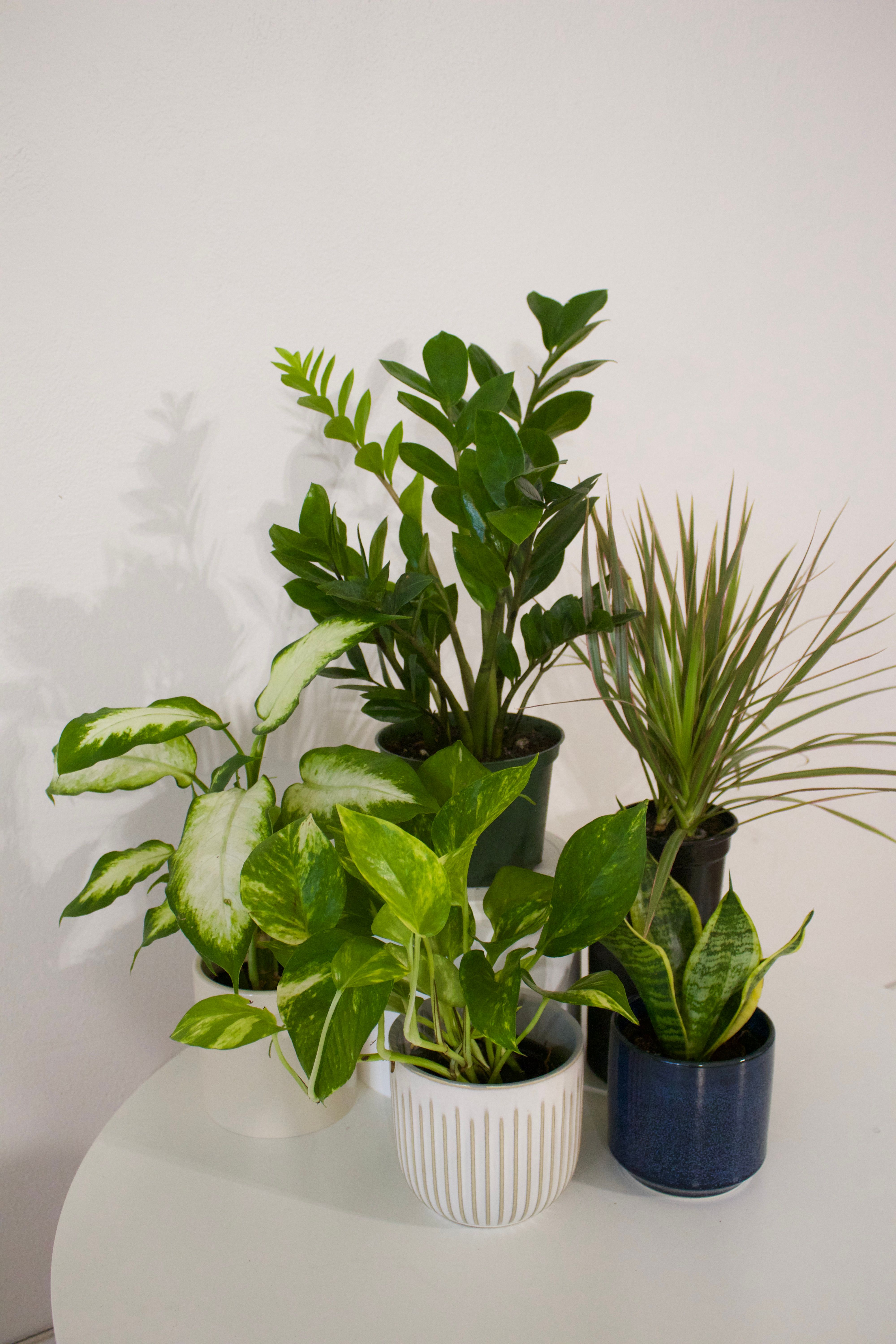
Not all of us have a sun-drenched living room with floor-to-ceiling windows. And for plant lovers, that can be a real challenge. You want to bring some green into your space, but you don’t have a ton of light… Don't worry, there are still options for you! While no plant can survive with no light, there are plants that’ll do okay in a bit darker of a spot. At Over Grown, we believe everyone deserves to have a plant-filled home, regardless of their lighting situation. Here are five of our favorite low-light houseplants that are happy to hang out in a little less light.
The ZZ plant is a champion of the low-light world. Its waxy, deep-green leaves give it a sleek, modern look that fits with any decor. This plant can handle very low light and is incredibly forgiving if you forget to water it. It stores water in its rhizomes, which are potato-like roots, making it extremely drought-tolerant. You could likely forget to water it for a month, and it would still be fine. If you’d like a full care guide on these beauties, check out our blog post, Caring for ZZ Plants.
- Watering: Let the soil dry out completely between waterings. When in doubt, it’s better to wait a few more days.
- Soil: Use a potting mix that drains well. We recommend Rosy Houseplant Soil which can be found in our stores.
- Fertilizer: Fertilize sparingly, once or twice during the growing season (spring and summer). We recommend our fertilizer drops you can find in our stores.
The snake plant is a classic for a reason. Known for its upright, sword-like leaves that come in a variety of green and yellow patterns, it thrives on neglect. The snake plant is another hardy plant that tolerates low light and little water. It’s a great choice for new plant owners and it even helps purify the air, making it a functional and beautiful addition to any home.
- Watering: Water only when the soil is completely dry. Overwatering can lead to root rot.
- Soil: A sandy, well-draining soil mix is best. We recommend Rosy Houseplant Soil which can be found in our stores.
- Fertilizer: A light feeding a few times a year is sufficient. We recommend our fertilizer drops you can find in our stores.
If you're looking for something with a bit more height, a Dracaena is an excellent choice. These plants often feature long, slender leaves on a woody cane, giving them a tree-like appearance. While many varieties prefer brighter, indirect light, there are some that are perfectly content with lower light conditions. Be sure to check the specific variety you're purchasing and feel free to ask one of our in-store employees for guidance on this when shopping with us!
- Watering: Water when the top half of the soil is dry. Avoid letting the plant sit in soggy soil.
- Soil: A standard, well-draining potting mix works well. We recommend Rosy Houseplant Soil which can be found in our stores.
- Fertilizer: Fertilize every few months during the growing season (spring and summer). We recommend our fertilizer drops you can find in our stores.
Almost everyone is familiar with Pothos, it is popular for good reason. It’s the ultimate beginner plant and a favorite for lower-light spots. Its leaves trail beautifully from a hanging basket or shelf, or you can even grow them climbing! These plants are great to learn all the signs plants will give you, as they go wilty when needing watered, and if they do need more light, they often will grow leggy and indicate that to you. Plus, they’re very easy to propagate and share with friends!
- Watering: Water when the top inch or two of soil is dry. Pothos are more forgiving of underwatering than overwatering.
- Soil: Any standard, well-draining potting mix will work. We recommend Rosy Houseplant Soil which can be found in our stores.
- Fertilizer: Fertilize once a month during spring and summer. We recommend our fertilizer drops you can find in our stores.
For those who want a splash of color in a low-light space, the Dieffenbachia is a great choice. Its large leaves are often variegated with shades of cream, yellow, or white, creating a striking contrast. While it appreciates some bright, indirect light to keep its variegation vibrant, it will live happily in a bit of a darker spot as well.
- Watering: Keep the soil consistently moist but not soggy.
- Soil: Use a well-draining potting mix. We recommend Rosy Houseplant Soil which can be found in our stores.
- Fertilizer: Fertilize every couple waterings during the growing season (spring and summer). We recommend our fertilizer drops you can find in our stores.
Remember, "low light" doesn't mean "no light." All plants need some light to survive. Place these low-light plants in a spot away from direct sun, like a north-facing window, on a bookshelf, or in a corner of a room, and they will add that beautiful desired greenery to your space!
We hope this guide helps you find the perfect plant for your home! If you need more personalized recommendations or have questions about a specific plant's needs, stop by one of Over Grown stores. We're always here to answer questions and help you grow your collection.
If you're looking for more expert advice, exclusive content, and a community of fellow plant lovers, be sure to sign up for the Over Grown newsletter below.