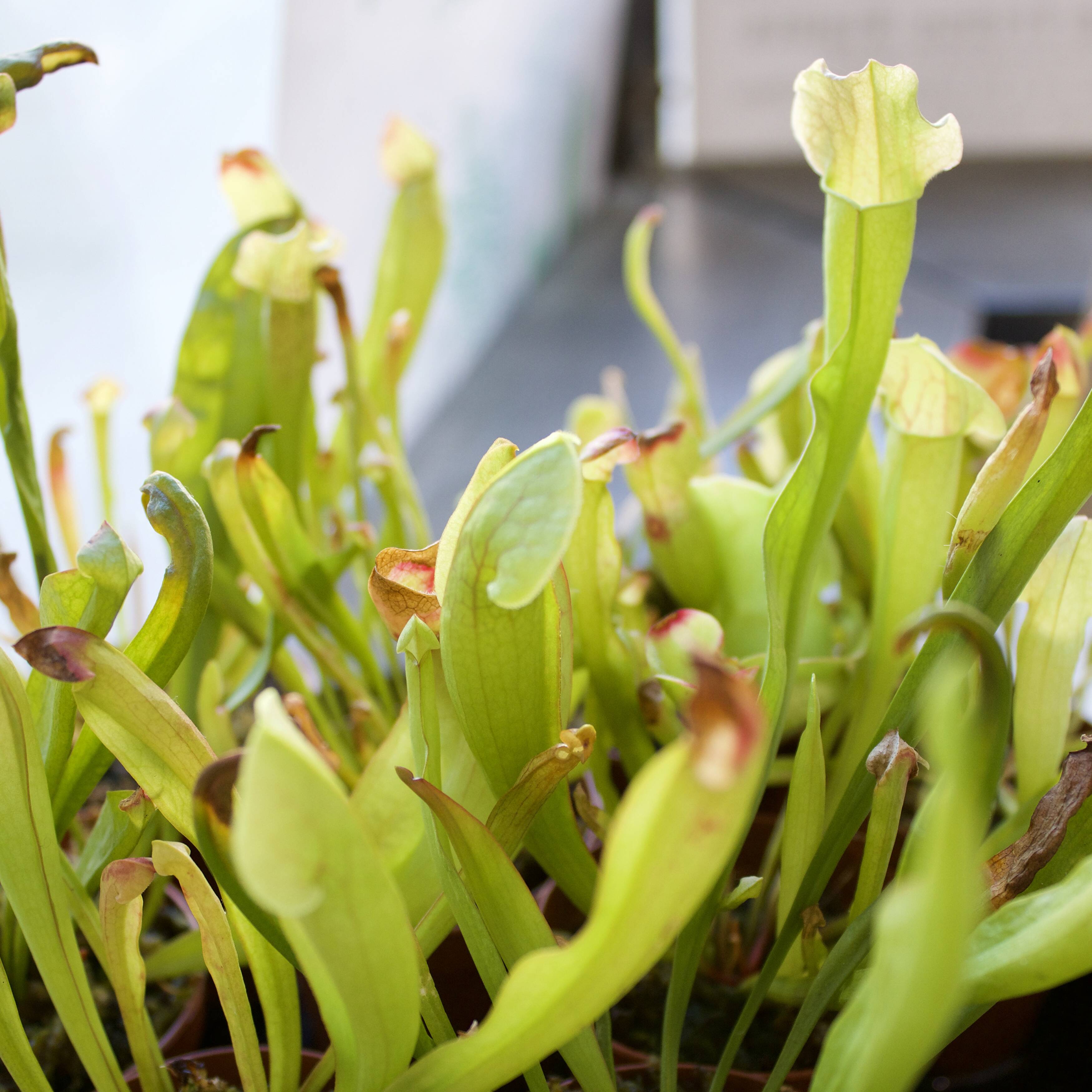
Carnivorous plants, such as Venus Flytraps, Pitcher Plants, and Sundews, are some of the most fascinating and unique plants! Unlike most houseplants that draw nutrients from the soil, these plants have evolved to thrive in nutrient-poor environments by "hunting" for their own supplement, insects. These plants are sure to bring an interactive element to your collection.
At Over Grown, we find carnivorous plants to be incredible teaching tools and conversational pieces. Because they come from very specific environments, their care is different from your average tropical, but once you understand their unique needs, they are surprisingly rewarding to grow.
Carnivorous Plant Lighting
Most carnivorous plants are sun-lovers and require significant energy to power their active traps and sticky secretions.
- Ideal light conditions: Full sun to very bright, indirect light is necessary. A south-facing windowsill that gets at least 6 hours of sun is ideal for most of these plants.
- Outdoor transition: Many varieties, particularly varieties of the Pitcher Plant, thrive even better when kept outdoors during the warmer months.
- Avoid: Low-light areas and darker rooms. Without enough light, the traps will lose their red coloration, won't close properly, and the plant will eventually weaken.
- Signs of improper light: This will look slightly different from the different varieties. If a Venus Flytrap's "mouths" stay green rather than turning red inside, or if a Sundew stops producing its "dew" droplets, it needs much more light.
Carnivorous Plant Watering
Watering is the most critical aspect of carnivorous plant care. They are extremely sensitive to minerals and must be kept in a "bog-like" state.
- The "Gold Rule" of water: Only use distilled water, rainwater, or reverse osmosis water (not common in most households, but if you do have it, then perfect!). Standard tap water and even some bottled spring waters contain minerals and salts that will slowly "burn" the roots of these sensitive plants.
- The tray method: Most carnivorous plants prefer to sit in a saucer or tray kept constantly filled with about an inch of pure water. This mimics the saturated soil of their native wetlands.
- Avoid: Ever letting the soil dry out. Even a brief period of dryness can be fatal for these plants
- Signs of improper watering: Discoloration or a sudden collapse of the plant often indicate that the water quality is poor or the soil has dried out too much.
Carnivorous Plant Soil and Fertilization
Standard potting soil is actually toxic to carnivorous plants because it contains fertilizers and minerals that their roots aren't equipped to handle.
- Potting medium: We use and recommend sphagnum moss for housing these plants. Avoid any soil that says "fortified" or "contains plant food."
- Fertilizing: Unlike other houseplants, you do not need to add traditional fertilizer to the soil. If the plant is kept indoors and isn't catching its own insects, you can occasionally drop a small, freshly killed insect into a trap or onto a sticky leaf.
- Avoid: Overfeeding. A Venus Flytrap only needs to eat once or twice a month to get the nutrients it needs. Don’t overdo it if you are going to manually give it insects.
Carnivorous Plant Humidity & Leaf Care
These plants are native to humid environments and appreciate moisture in the air to keep their traps functional.
- Methods to increase humidity: Keeping them in a tray of water naturally boosts the local humidity. For more sensitive species like Pitcher Plants, a nearby humidifier or a glass terrarium can help them thrive. For more tips on humidity, visit our previous blog, “Humidity 101.”
- Trap care: Avoid "teasing" the traps of a Venus Flytrap. Closing a trap without a meal inside costs the plant a significant amount of energy, and each trap can only close a few times before it dies off.
Carnivorous Plant Pests and Treatment
While they eat bugs, carnivorous plants can still be bothered by certain pests that are too small or too agile for their traps.
- Common Pests: Watch for Aphids or Fungus Gnats, which can sometimes thrive in the damp soil.
- Treatment: Because they are so sensitive to chemicals, be very cautious with treatments. A gentle manual removal of pests is often best. Our Plant Protect Spray can be used, but we recommend testing it on a single leaf first to ensure the plant doesn't react. For more on identification, visit our blog, “Identifying & Treating Houseplant Pests.”
Carnivorous plants have unique life cycles, including a period of winter rest that can sometimes look like a problem to new plant parents.
Winter Dormancy
- Causes: Many temperate carnivorous plants require a cool dormancy period in the winter. They will stop growing, and many traps may turn black and die back.
- Solutions: This is natural! Keep them in a cooler spot and reduce watering just slightly until spring growth returns.
Black Traps/Pitchers
- Causes: It is normal for individual traps/pitchers to turn black and die after they have eaten a few times. However, if the whole plant is blackening, it may be due to mineral burn from tap water.
- Solutions: Trim away dead traps to keep the plant tidy. Ensure you are only using pure, distilled water.
Traps Won't Close
- Causes: This is often a sign that the plant is either lacking energy from light or that the specific trap has reached the end of its life.
- Solutions: Move the plant to a brighter location and avoid touching the traps.
How to succeed with your tiny hunters:
- Lighting: Maximum light, they love the sun!
- Watering: Distilled water only, keep them sitting in a tray of water.
- Soil: Never use standard potting soil or fertilizer.
Stop by Over Grown to see our current collection of these incredible plants. Our team can help you pick the right variety and get you started with the proper supplies!
We hope this guide helps your carnivorous plants thrive! For more expert advice and community updates, sign up for our newsletter below.