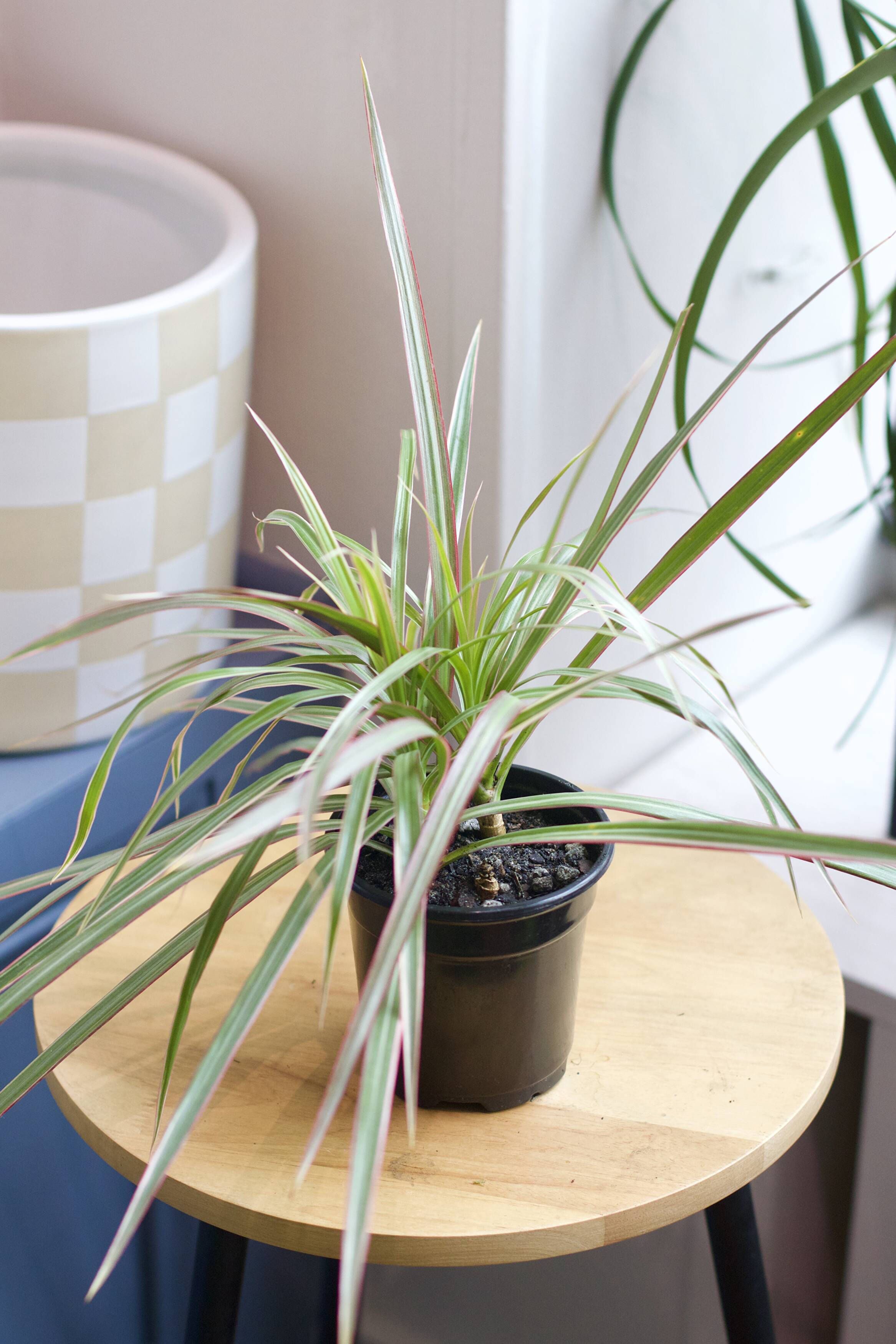
Dracaenas are beautiful, structural houseplants, known for their sword-like foliage and diverse growth habits. From the classic varieties, to the more uncommon ones, these plants bring an effortless, architectural height to any room. They are resilient and are excellent choices for beginners or for those trickier spots in your home that need a touch of green without the high-maintenance demands.
At Over Grown, we love Dracaenas for their versatility and air-purifying qualities. They are slow and steady growers that add a sense of calm to your space with very little fuss.
Dracaena Lighting
While Dracaenas are incredibly adaptable to various light levels, their growth speed and color vibrancy are directly tied to their sun exposure.
- Ideal light conditions: Bright, indirect light is the sweet spot for most varieties. A spot near an east-facing window or a few feet back from a west window allows them to thrive and maintain their leaf patterns.
- Adaptability: Many Dracaenas are remarkably tolerant of lower light levels, making them a favorite for offices or interior rooms. Note that they will grow slower and may lose some of their variegation in darker spots.
- Avoid: Direct, harsh afternoon sun will quickly scorch the leaves, leading to unsightly brown or bleached patches.
- Signs of improper light: If the leaves are becoming pale and the plant looks "thin," it likely needs more light. If you see scorched spots, it’s getting too much direct sun.
Dracaena Watering
Dracaenas prefer to dry out significantly between waterings. They are much more likely to suffer from overwatering than underwatering.
- How often to water: Water thoroughly when the soil has dried out completely. They store water in their canes and thick leaves, giving them a high level of drought tolerance.
- Check the soil: Use your finger to ensure you aren't watering until it's dry, or pick up the pot and assess the weight of it.
- Avoid: Frequent small waterings. It is much better to drench the soil until it drains and then leave it alone until it dries out again.
- Pro-tip: Like many tropicals, Dracaenas can be sensitive to chemicals in tap water, which can cause brown leaf tips. If this occurs, try using distilled water.
Dracaena Soil and Fertilization
A well-draining, airy soil is essential to ensure the roots stay oxygenated and healthy.
- Potting medium: A high-quality indoor mix with good drainage is vital. We recommend Rosy Soil’s Houseplant mix, available in-store, which provides the perfect balance of aeration and moisture retention. You can learn more in our blog, “All About Rosy.”
- Fertilizing: Dracaenas are light feeders. Apply a balanced liquid fertilizer every couple of waterings during the spring and summer. Our liquid fertilizer drops are a great, gentle way to keep your Dracaena nourished during the growing season.
Dracaena Humidity & Leaf Care
While they are quite adaptable to average home humidity, Dracaenas appreciate a bit of extra moisture in the air to keep their leaf tips pristine.
- Methods to increase humidity: They generally handle standard home air well, but a nearby humidifier or a pebble tray during the dry winter months will prevent the edges from becoming crispy. For more tips on humidity, visit our previous blog, “Humidity 101.”
- Clean the foliage: Dust can settle on the long, narrow leaves over time. Gently wipe them down with a damp, soft cloth every few weeks to keep them looking shiny and healthy. If they have thinner leaves, you can also use the shower to clean any dust off the leaves!
Dracaena Pests and Treatment
Dracaenas are generally hardy, but they can occasionally attract a few common indoor pests if they are stressed.
- Common Pests: Watch for Mealybugs (white cottony fluff in the leaf joints) and Spider Mites (fine webbing) if the air is particularly dry.
- Treatment: Isolate the plant immediately and wipe down the leaves. Use our Plant Protect Spray to thoroughly treat the plant and ensure it stays healthy. For more help, visit our blog, “Identifying & Treating Houseplant Pests.”
Dracaenas are generally pretty easy and adaptable. Most issues they may have are easily fixable.
Brown, Crispy Leaf Tips
- Causes: Usually a sign of low humidity, inconsistent watering, or sensitivity to tap water minerals.
- Solutions: Switch to distilled water and increase the humidity. You can trim the brown tips off with clean scissors, just follow the natural shape of the leaf.
Yellowing Lower Leaves
- Causes: This can be a sign of overwatering. However, it is also a natural part of the plant’s growth cycle as it sheds older leaves to create its signature "trunk" or cane.
- Solutions: Check the soil moisture. If only the very bottom leaves are yellowing and the rest of the plant looks healthy, it is likely just natural aging.
Soft or Mushy Cane
- Causes: A serious sign of advanced root or stem rot due to overwatering.
- Solutions: Reduce watering immediately. If the cane is very soft, you may need to cut away the healthy top portion and propagate it in fresh, dry soil.
How to keep your architectural plants thriving:
- Lighting: Bright, indirect light is best, but they are very tolerant of lower light.
- Watering: Let the soil dry out significantly between waterings and avoid overwatering at all costs.
- Patience: These are slow growers, so enjoy their steady presence in your home!
Stop by the shop to see our variety of Dracaenas and let our team help you find the perfect structural piece for your indoor jungle.
We hope this guide helps your Dracaenas stand tall and beautiful! For more expert advice and community updates, sign up for our newsletter below.