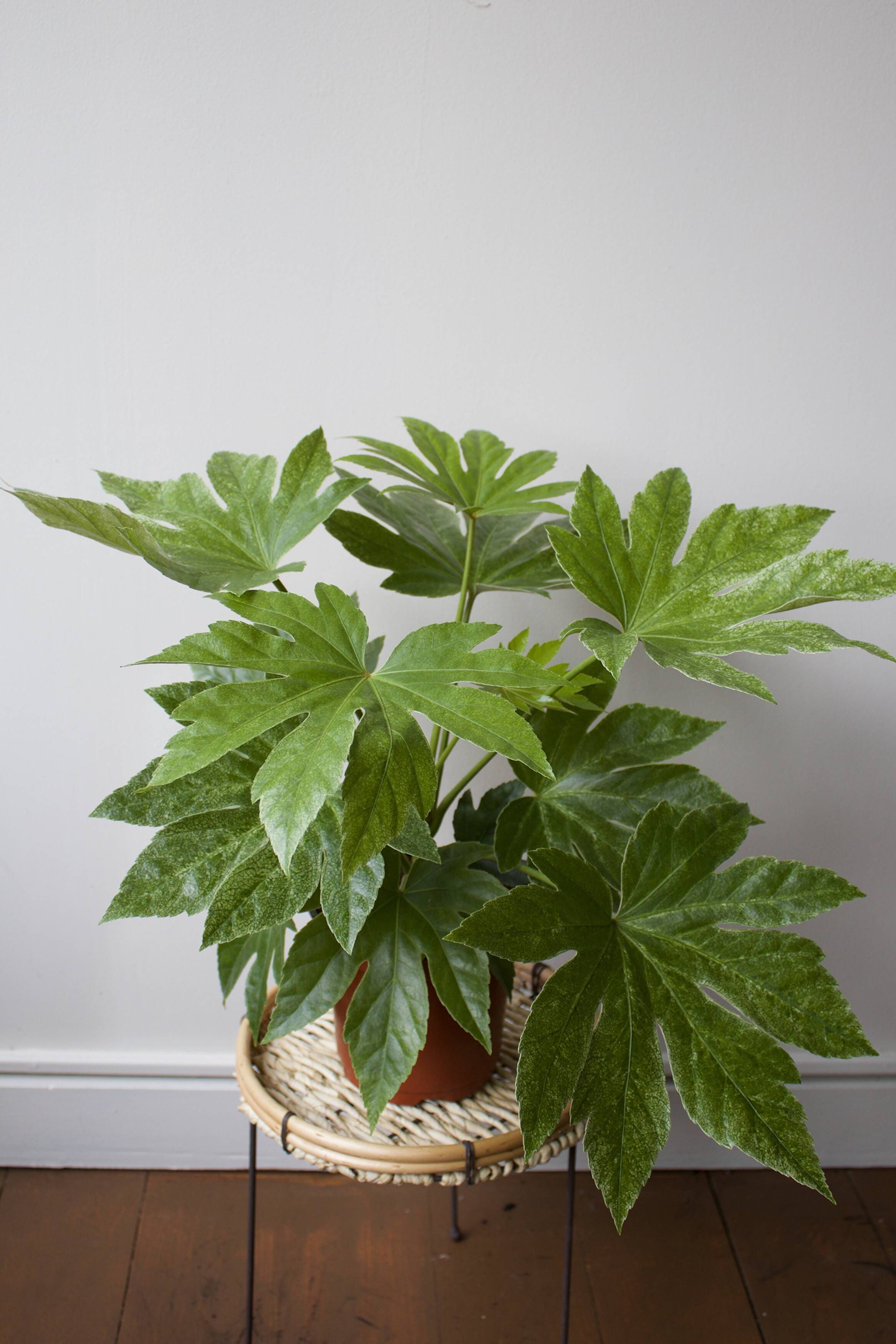
The Fatsia japonica, also known as the Japanese Aralia or Paperplant, is a showstopper for anyone looking to add a bold, unique feel to their indoor jungle. Its most striking feature is its massive, lobed shaped leaves. The Fatsia is actually quite hardy and brings a tropical vibe to any room.
At Over Grown, we love the Fatsia for its ability to fill a corner with dramatic greenery. Whether you choose the classic deep green variety or the "Spider’s Web" variety with its frosted, speckled variegation, this plant is a resilient grower that makes a lasting impression.
Fatsia Lighting
Unlike many of its sun-loving tropical counterparts, the Fatsia is a bit more tolerant of other lighting conditions.
- Ideal light conditions: Medium to bright, indirect light is perfect. It feels right at home in a spot that mimics a forest floor, such as near a north or east-facing window.
- The colors: If you have a variegated variety, it will appreciate a bit more brightness to keep its white patterns sharp, but still needs protection from harsh rays.
- Avoid: Hot, direct afternoon sun. The large leaves are thin and can easily scorch, turning yellow or developing brown, papery patches.
- Signs of improper light: If the plant is stretching and the leaves are becoming smaller and spaced further apart, it is likely in too much shade.
Fatsia Watering
Fatsias enjoy consistent moisture, but they don't want to be kept soaked. Finding that middle ground is the key to a happy plant.
- How often to water: Water thoroughly when the top couple inches of soil feels dry. They prefer to stay slightly moist during their active growing season in the spring and summer.
- Check the soil: Use your finger to test the moisture. If the soil feels damp, wait a day or two. In the winter, you can allow the soil to dry out a bit more between waterings.
- Avoid: Letting the plant sit in soggy soil, which can lead to root rot. However, if the soil dries out completely, the large leaves will droop dramatically.
- Signs of improper watering: Wilting leaves usually mean the plant is thirsty, while yellowing leaves combined with soft stems are often a sign of overwatering.
Fatsia Soil and Fertilization
A rich, well-draining potting medium will provide the nutrients and drainage necessary for those large leaves to develop properly.
- Potting medium: A high-quality, loamy potting mix works best. We recommend Rosy Soil’s Houseplant mix, available in-store, which offers excellent aeration and the organic matter these plants love. Learn more in our blog, ‘All About Rosy.’
- Fertilizing: During the growing season, apply a balanced liquid fertilizer every 4-6 weeks. Our liquid fertilizer drops provide a gentle boost to help your Fatsia produce those giant, iconic leaves.
Fatsia Humidity & Leaf Care
Fatsias are remarkably adaptable to home humidity levels, but they appreciate a little extra moisture to keep their foliage looking pristine.
- Methods to increase humidity: While they don't require tropical levels of humidity, they will benefit from a nearby humidifier or being grouped with other plants, especially during the dry winter months. For more tips on humidity, visit our previous blog, 'Humidity 101.'
- Clean the foliage: Those giant leaves can be dust magnets! Wipe the leaves down with a damp, soft cloth every few weeks. This keeps the plant looking glossy and helps it photosynthesis efficiently.
Fatsia Pests and Treatment
While generally hardy, the Fatsia's broad leaves can sometimes attract common indoor pests if the air is too dry.
- Common Pests: Watch for Spider Mites (fine webbing) or Mealybugs (white cottony fluff) on the undersides of the leaves. Aphids may also appear on soft new growth.
- Treatment: Isolate the plant and wipe down the leaves. We recommend a thorough application of our Plant Protect Spray to keep your Fatsia pest-free. For more help, visit our blog, ‘Identifying & Treating Houseplant Pests.’
Fatsias are straightforward plants, and most issues are easily solved by adjusting their environment.
Drooping Leaves
- Causes: Usually a sign that the plant is thirsty.
- Solutions: Give it a thorough watering and it should perk up within a few hours. If the soil is already wet and it's drooping, check for root issues.
Brown Leaf Edges
- Causes: Typically caused by dry air or inconsistent watering.
- Solutions: Increase the humidity around the plant and ensure you aren't letting the soil dry out too much between waterings.
Yellowing Lower Leaves
- Causes: This can be a sign of natural aging as the plant grows taller, but frequent yellowing is usually a sign of overwatering.
- Solutions: Adjust your watering frequency and ensure the pot has excellent drainage.
How to keep your plant thriving:
- Lighting: Bright, indirect light or medium shade is ideal.
- Watering: Keep the soil consistently moist but not soggy.
- Temperature: They prefer cooler spots and don't like being near heat vents.
Stop by the shop to see our current selection of Fatsia japonica and let our team help you find the perfect bold addition to your space.
We hope this guide helps your Fatsia grow grand and lush! For more expert advice and community updates, sign up for our newsletter below.