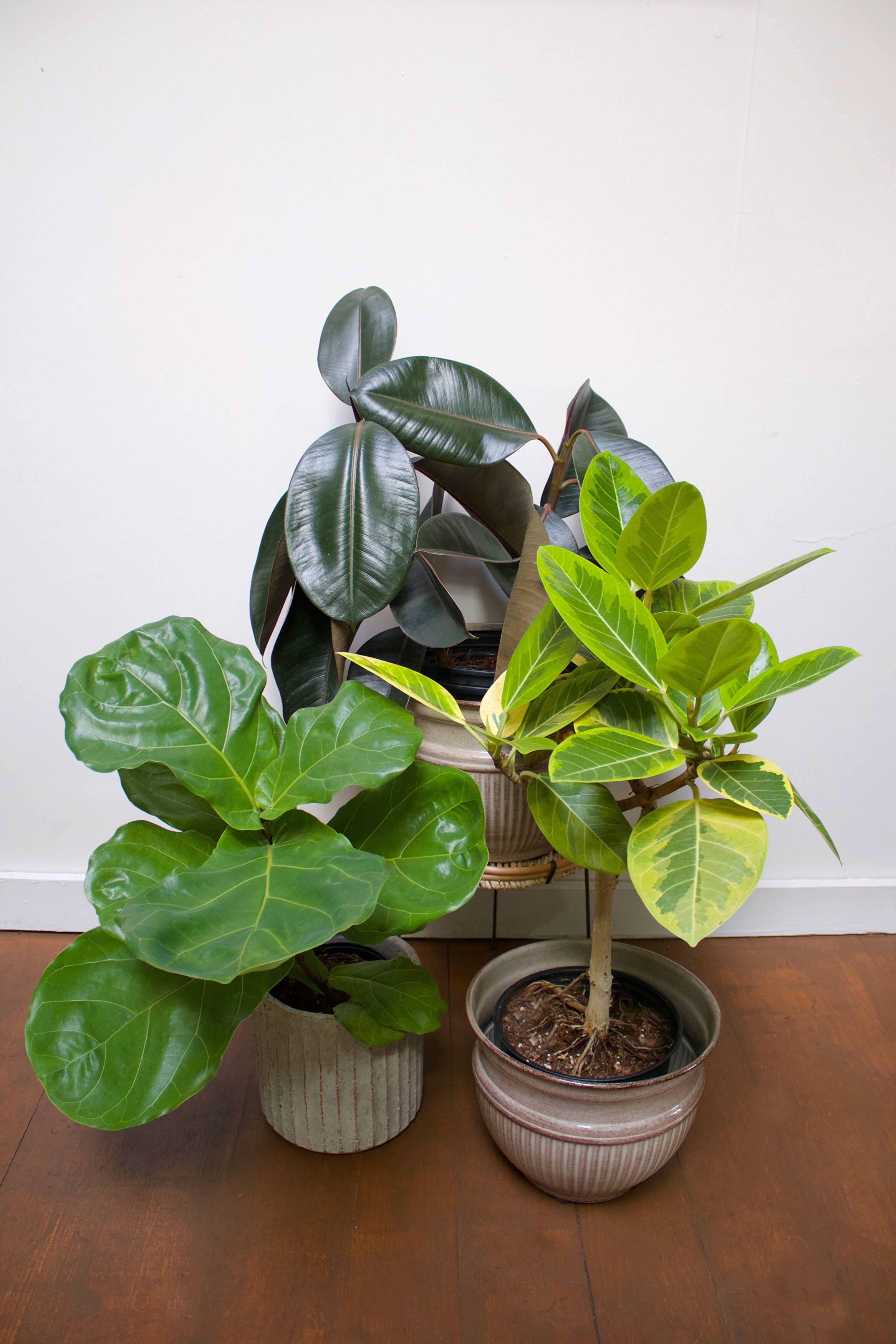
Ficus plants are among the most classic and striking choices for anyone's indoor jungle, instantly adding a tropical, tree-like structure to any space. This large genus includes diverse and popular varieties like the beloved Fiddle Leaf Fig, and Rubber Tree. While Ficus plants have a reputation for being a bit "finicky", consistent care and a stable environment are the keys to keeping them thriving. At Over Grown, we know that once you understand the few simple rules of the Ficus family, you can enjoy these beautiful plants in your home!
Ficus Lighting
Ficus plants are sun lovers! They need bright light to support their large leaves and prevent leaf drop.
- Ideal light conditions: Bright, indirect light is best. A few hours of gentle morning sun (east-facing) is generally welcomed, or a position a few feet back from a south or west-facing window.
- Avoid: Low light, which will lead to leggy growth, pale leaves, and excessive leaf drop. Harsh, intense midday sun can scorch the leaves, especially for thinner leafed ficus, such as the fiddle leaf fig.
- Signs of improper light: Dropping leaves is often the first sign of insufficient light or a sudden light change. New leaves that are significantly smaller than the old ones also indicate they need more light.
Ficus Watering
Inconsistent or incorrect watering is the biggest causes of Ficus problems.
- How often to water: Water thoroughly until it drains from the bottom hole, then allow the top couple inches of soil to dry out before watering again. For large plants, you may let the soil dry out slightly further down.
- Check the soil: Use your finger to check the soil. The frequency will vary greatly by season and plant size, less in winter, more in summer.
- Avoid: Never let a Ficus sit in a saucer full of water, as this will quickly lead to root rot and leaf drop.
Ficus Temperature & Stability
Ficus plants are tropical and are highly sensitive to sudden changes.
- Ideal Conditions: They thrive in consistent room temperatures (65°F - 80°F).
- Avoid: Cold drafts from windows or doors, as well as blasts of hot air from heating vents or radiators. Once you find a spot your Ficus loves, do not move it, as the change in environment will often trigger a stressful leaf-dropping episode.
Ficus Soil and Fertilization
- Potting medium: A well-draining, airy mix that retains some moisture is essential. A standard indoor potting mix is suitable, but we use and recommend Rosy Soil's Houseplant, which can be found in-stores. Check out our blog 'All About Rosy' to learn more about Rosy Soil. It is also recommended to use a pot with proper drainage, to allow water to drain through and not cause rot root to the plant.
- Fertilizing: During the growing season (spring and summer), you can apply a diluted, balanced liquid fertilizer around every 4 weeks. You can reduce fertilization during fall and winter. For a simple way to feed your plant, check out our liquid fertilizer drops. They're available in-store and are perfect for consistent, healthy growth.
Ficus Humidity & Leaf Care
Most Ficus varieties, especially the Fiddle Leaf Fig, appreciate high humidity, though the Rubber Tree is generally more tolerant of average household levels.
- Methods to increase humidity: Use a humidifier near your larger Ficus plants, especially during the dry winter months.
- Clean the foliage: Their large, glossy leaves are dust magnets. Wipe down the leaves with a damp, soft cloth monthly to remove dust, which ensures the plant can properly photosynthesize and helps deter pests. Our plant protect spray is also great for routine leave cleaning here, Find it in-stores or online!
Ficus Pests and Treatment
- Common Pests: Look out for Spider Mites (fine webbing and tiny speckles on leaves) and Scale (small, immobile brown or yellow bumps often found on stems or under leaves).
- Treatment: For all pests, isolate the plant immediately. Wipe down all leaves and stems with a damp cloth. For Scale and Mealybugs, you can dab them directly with a cotton swab dipped in rubbing alcohol. Follow this up with our Plant Protect Spray, to get anything that was missed. For Spider Mites, we recommend using our Plant Protect Spray as well. For more on pest identification and treatment, visit our blog, ‘Identifying & Treating Houseplant Pests.’
Ficus plants are communicative; they often drop leaves to tell you something is wrong. Here are the most common issues and how to resolve them:
Sudden Leaf Drop
- Causes: The most common reasons are environmental shock (moving the plant, bringing it home, or sudden temperature change), inconsistent watering, or cold drafts.
- Solutions: Find a permanent, stable spot away from drafts. Commit to a consistent watering schedule. Be patient; the plant will stabilize and recover, but it takes time.
Yellowing Leaves & Brown, Mushy Spots
- Causes: This is the classic sign of overwatering and potential root rot. The plant is suffocating in soggy soil.
- Solutions: Immediately stop watering and allow the soil to dry out. If the problem is severe, check the roots for mushy, brown sections and repot into fresh, well-draining soil.
Brown Edges or Crispy Tips
- Causes: Underwatering (allowing the soil to get too dry for too long), low humidity, or chemical burn from minerals in tap water.
- Solutions: Ensure you are watering thoroughly when the top soil is dry. Increase humidity, or if your tap water is very hard, consider occasionally using distilled water.
Key recommendations for new Ficus owners:
- Lighting: Bright, indirect light is essential. More light is generally better.
- Watering: Water thoroughly, then allow the top 1-2 inches of soil to dry out completely before watering again.
- Stability: Choose a permanent spot and avoid moving the plant to prevent leaf drop.
- Consistency: Avoid sudden changes in light, temperature, or watering frequency.
As always, our in-store employees are always available to provide personalized guidance and assistance with your plant care questions.
We hope this guide helps your Ficus plants thrive! If you're looking for more expert advice, exclusive content, and a community of fellow plant lovers, be sure to sign up for the Over Grown newsletter below.