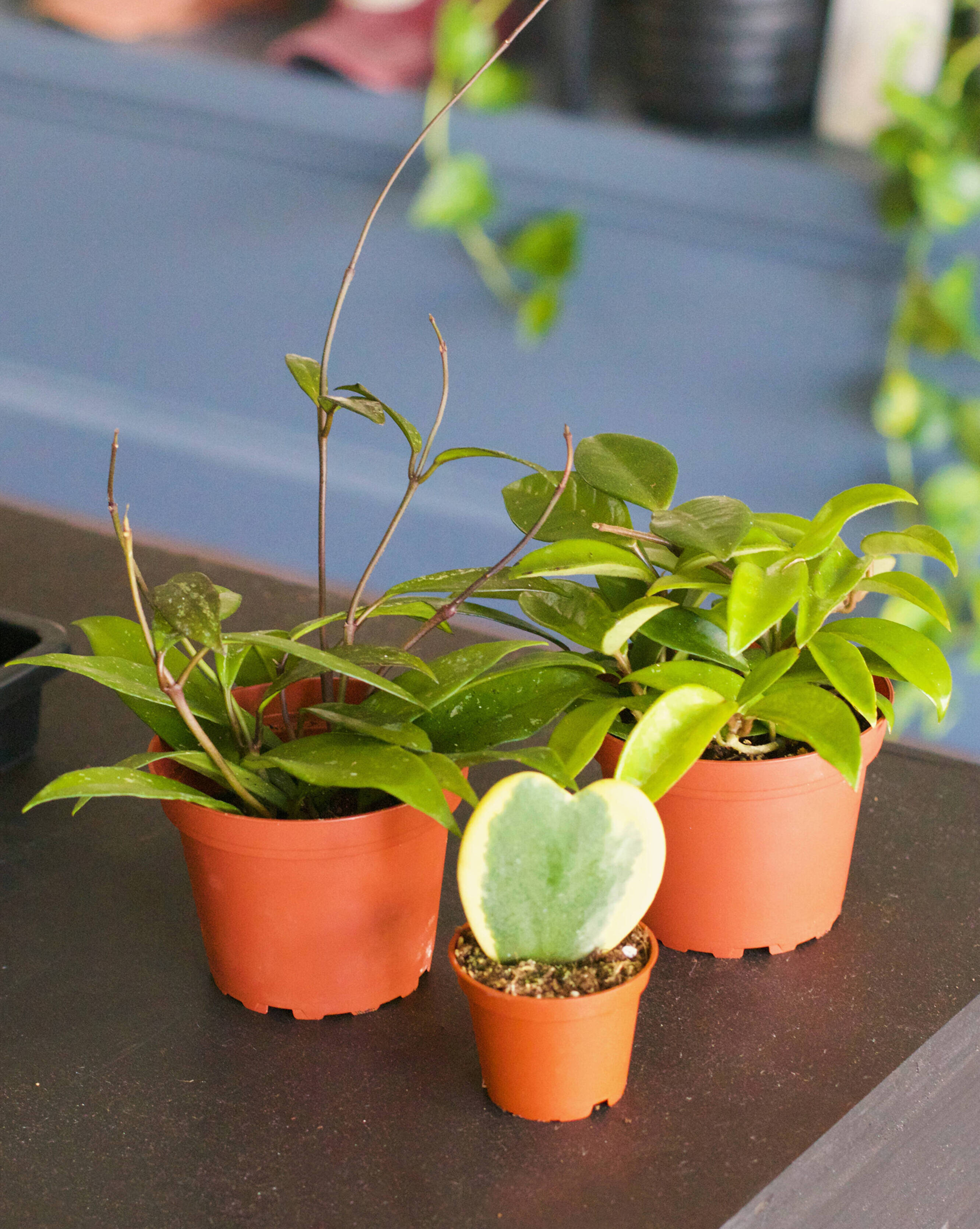
Hoyas are a beautiful and diverse group of plants, celebrated for their thick, waxy leaves and unique, star-shaped flower clusters. Often called "Wax Plants" due to their foliage, they are a beloved addition to any plant collection. While many hoyas are known for being relatively low-maintenance, understanding their specific needs is key to a thriving plant. Hoyas are also pet-friendly, making them a great choice for homes with animals. There are hundreds of Hoya varieties, each with unique leaf shapes and colors, some even trailing for a fun way to display! Despite their different looks, most Hoyas share similar care requirements for optimal growth. At Over Grown, we have a stunning selection of Hoyas and our team would love to help you find the perfect one for your space.
Hoya Lighting
Originating from tropical and subtropical climates, many Hoyas enjoy bright light.
- Ideal light conditions: Provide bright, indirect light. East-facing windows are often perfect, or a spot a few feet away from a south or west-facing window. Many Hoyas can tolerate some direct morning sun, which can encourage blooming.
- Avoid: Prolonged, harsh, direct sunlight can scorch leaves, while too little light can lead to a lack of blooms and slow growth.
- Signs of improper light: Sun-stressed Hoyas might show reddish or yellowish discoloration on their leaves. Insufficient light can result in a leggy plant with small leaves. Some Hoyas can even get “sun stressing” which may bring out some different colors.
Hoya Watering
Hoyas are succulent-like and prefer to dry out between waterings. Overwatering is a common mistake.
- How often to water your Hoya: Water when the soil is completely dry. The frequency will depend on environmental factors, pot size, and the specific Hoya variety, but it is often less frequent than with other houseplants. A good test is to stick your finger a couple of inches into the soil.
- Potting advice: Use a pot with proper drainage to ensure water can flow through freely, which is crucial for preventing root rot.
Hoya Humidity
While some Hoyas appreciate high humidity, they are quite forgiving of average indoor humidity levels.
- Methods to increase humidity: If your home is very dry, you can group your Hoyas together to create a localized humid microclimate. Adding a humidifier nearby your Hoyas is also an option, but it's not strictly necessary.
Hoya Soil and Fertilization
- Potting medium: A chunky, airy, and well-draining mix is essential for Hoyas. This prevents the roots from sitting in soggy soil. A standard indoor potting mix with added perlite or orchid bark is suitable, but we use and recommend Rosy Soil's Houseplant mix, which can be found in-stores. Check out our blog 'All About Rosy' to learn more about Rosy Soil.
- Fertilizing: During the growing season (spring and summer), you can apply a diluted, balanced liquid fertilizer around every 4 weeks. You can reduce it during fall and winter. For a simple way to feed your plant, check out our liquid fertilizer drops. They're available in-store and are perfect for consistent, healthy growth. Hoyas can produce beautiful blooms when given the right conditions, consistent fertilization can help encourage this.
Hoya Browning Edges
- Causes: The most common factors are underwatering or, more likely, overwatering. Browning edges can also be a sign of inconsistent watering.
- Solutions: Let the soil dry out completely between waterings. Use a well-draining soil mix and a pot with drainage.
Hoya Not Blooming
- Causes: The most common cause is a lack of sufficient light and nutrients. Hoyas also prefer to be a little root-bound before they flower.
- Solutions: Move your Hoya to a brighter location. If it's still in a large pot, you might want to hold off on repotting to encourage blooms. Make sure to stay on top of fertilization as well to help encourage blooming.
Hoya Pests and Treatment
- Common Hoya pests: Monitor for mealybugs (white, cottony bugs), spider mites (fine webbing), and scale (brown bumps on stems and leaves).
- Treatment: For infestations, wipe leaves with a damp cloth and apply insecticidal soap. We recommend our organic pest treatment that you can find in-store to keep infestations at bay and prevent future outbreaks.
To learn more about houseplant pests, visit our blog, Identifying and Treating Houseplant Pests. Still struggling to figure out what's wrong with your plant? Sometimes a little expert guidance makes all the difference. Stop by Over Grown for a plant consultation, and we'll help get your plant back on track.
Key recommendations for new Hoya owners
- Lighting: Bright, indirect light is best. Some direct morning sun can be a bonus.
- Watering: Let the soil dry out completely between waterings.
- Patience: Hoyas are slow growers and can take time to bloom, but the wait is worth it!
As always, our in-store employees are always available to provide personalized guidance and assistance with your plant care questions.
We hope this guide helps your Hoyas thrive! If you're looking for more expert advice, exclusive content, and a community of fellow plant lovers, be sure to sign up for the Over Grown newsletter below.