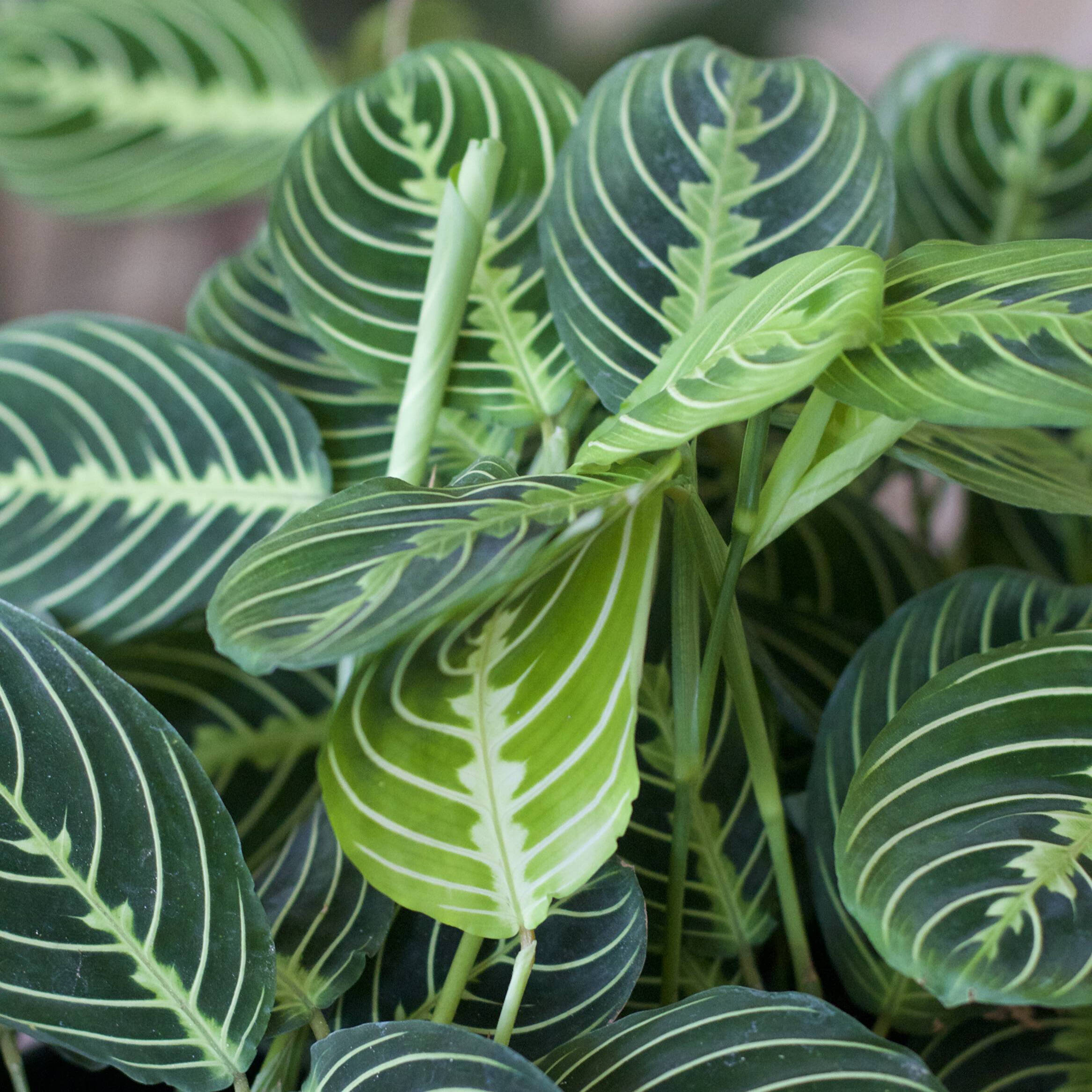
Marantas, famously known as Prayer Plants, are some of the most captivating plants you can add to your collection. They earn their nickname from their unique nyctinastic movement: their leaves stay flat during the day to soak up light and fold upward at night, resembling hands tucked in prayer. With their intricate patterns, they bring a sense of movement and artistry to any shelf.
At Over Grown, we love Marantas for their personality. They are expressive plants that will tell you exactly how they feel, and once you master their rhythm, they reward you with their stunning, velvety foliage.
Maranta Lighting
In their native tropical habitats, Marantas live on the forest floor, filtered under a heavy canopy. They prefer mimicking that dappled environment in your home.
- Ideal light conditions: Medium to bright, indirect light is perfect. A north or east-facing window provides the soft light they want.
- The patterns: If the light is too low, the plant will grow slowly and the vibrant markings may fade. If the light is too bright, the leaves will look washed out or bleached.
- Avoid: Direct, harsh sunlight is Maranta's biggest enemy. It will quickly burn the thin, delicate leaves and cause permanent damage to the variegation.
- Signs of improper light: Leaves that stay "folded" during the day may be trying to protect themselves from too much light. On the other hand, very small new growth usually points to a need for a slightly brighter spot.
Maranta Watering
Marantas don't like to be soggy, but they absolutely don’t want to get to try either.
- How often to water: Aim to keep the soil consistently moist but not saturated. Water when the top inch or so of soil feels dry to the touch.
- Check the soil: Use your finger to test the moisture frequently. Because they have relatively shallow root systems, they can dry out faster than larger plants in the same environment.
- Avoid: Allowing the soil to dry out completely will lead to immediate drooping and crispy edges. On the flip side, letting them sit in a saucer of water will cause root rot.
- Pro-tip: Marantas can be sensitive to fluoride and salts in tap water. If you notice persistent brown tips despite proper watering, try using distilled water.
Maranta Soil and Fertilization
A light, breathable soil that retains moisture without becoming compacted is vital for these plants.
- Potting medium: A well-draining soil that can still retain a bit of moisture is best. We use and recommend Rosy Soil's Houseplant mix, which you can find in-stores. It provides the perfect texture that Maranta roots love. For more details, check out our blog “All About Rosy.”
- Fertilizing: During the active growing months of spring and summer, use a balanced liquid fertilizer every 3-4 weeks. Since these plants have thinner roots, we recommend diluting the fertilizer down a bit, so it won’t burn the root system. Our liquid fertilizer drops, available in-store, are a great way to provide gentle, consistent nutrition.
Maranta Humidity & Leaf Care
Coming from humid, tropical regions, Marantas are big fans of moisture in the air. High humidity is the secret to keeping their leaf tips pristine.
- Methods to increase humidity: Marantas thrive when humidity is 50% or higher. They are perfect candidates for a bathroom with a window, a pebble tray, or a spot right next to a humidifier. For more humidity tips, check out our blog, “Humidity 101”.
- Clean the foliage: Their wide, flat leaves can collect dust, which blocks their ability to "breathe" and move. Gently wipe the leaves with a soft, damp cloth every few weeks. Just be careful, as the leaves are thinner than some other houseplants.
Maranta Pests and Treatment
A stressed or dry Maranta can occasionally attract unwanted visitors.
- Common Pests: Keep an eye out for Spider Mites, which love the dry air that Marantas hate. You might see tiny speckles on the leaves or fine webbing on the undersides.
- Treatment: If you spot pests, isolate the plant immediately. Give it a gentle rinse in the sink to wash away mites, then apply our Plant Protect Spray thoroughly. For more advice, check out our blog, “Identifying & Treating Houseplant Pests.”
Because Marantas are so expressive, they are easy to "read" once you know what to look for.
Brown, Crispy Leaf Edges
- Causes: This is almost always due to low humidity or using tap water with high mineral content.
- Solutions: Increase humidity with a humidifier and consider switching to filtered water.
Yellowing Leaves
- Causes: Frequent yellowing of many leaves usually indicates overwatering or a sudden temperature drop (they hate cold drafts!).
- Solutions: Ensure the soil is well-draining and the plant is kept in a warm spot away from AC vents or drafty windows.
The Plant Stops "Praying"
- Causes: If the leaves stop folding at night or opening in the day, the plant is usually stressed by extreme light or lack of water.
- Solutions: Check your light levels and soil moisture. Sometimes, a simple move to a more stable environment is all it takes to get them back in their rhythm.
Key recommendations for your new Prayer Plant:
- Lighting: Soft, indirect light mimics their natural forest home.
- Watering: Keep the soil consistently moist - but never soggy, never bone-dry.
- Humidity: The more, the better! Your Maranta will thank you for the extra moisture.
If you’re looking to add one of these beauties to your collection, stop by the shop to see our current varieties. Our team is always happy to help you find the right spot for your new friend!
We hope your Marantas bring a bit of rhythm and color to your home! For more plant guides and workshop updates, sign up for our newsletter below.