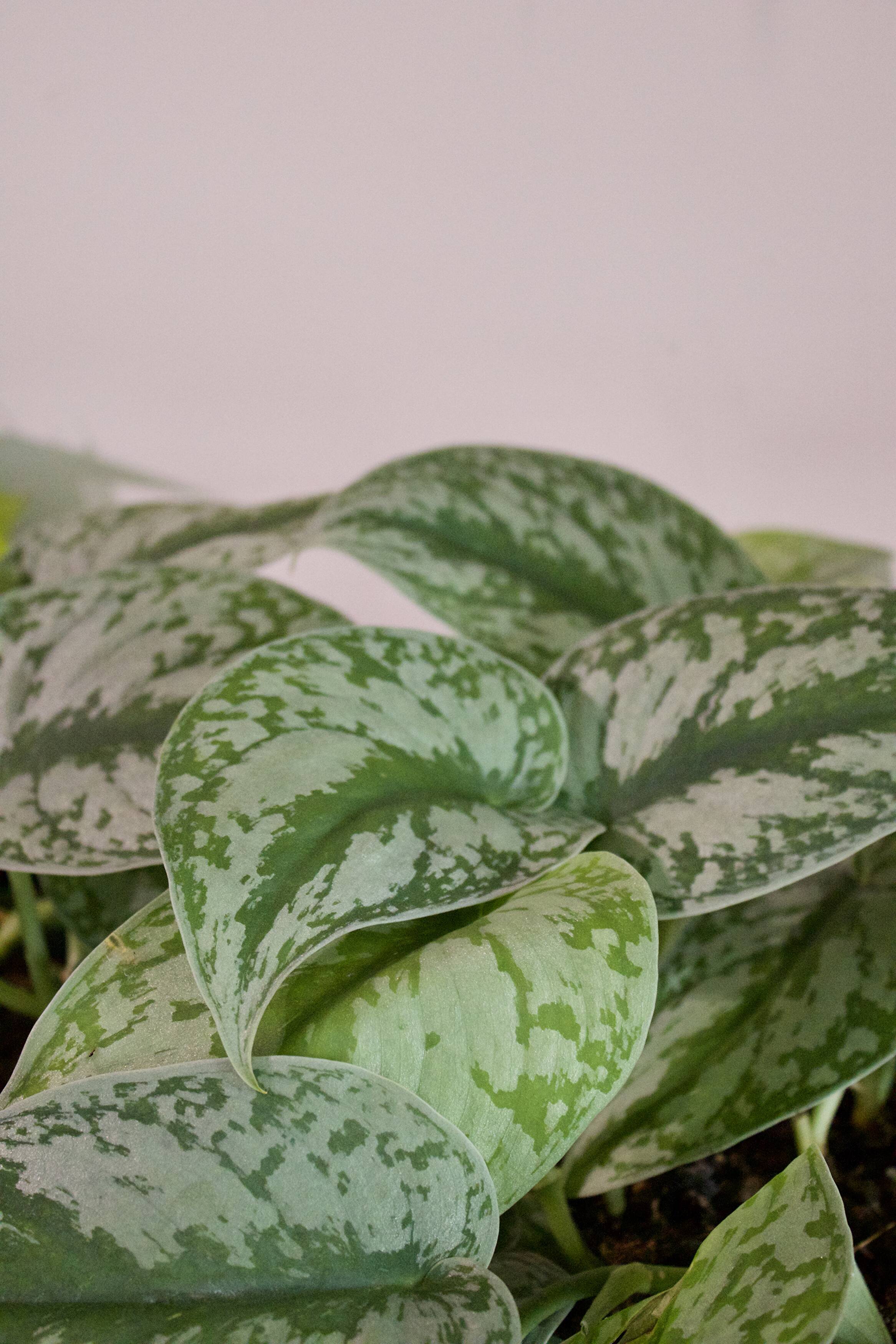
Scindapsus plants are some of the most gorgeous vining plants you can bring into your home. Though they share a common name with Pothos, they belong to their own distinct genus and are easily recognized by their thick, heart-shaped leaves and signature silvery variegation that looks almost metallic under the right light.
At Over Grown, we adore Scindapsus for their unique texture and their incredibly communicative nature. If you have already mastered something like a Pothos, this should be the next addition to your collection!
Scindapsus Lighting
To keep that silver shimmer bright and the patterns distinct, Scindapsus needs a bit of strategic lighting.
- Ideal light conditions: Medium to bright, indirect light is the goal. They thrive near an east-facing window or tucked back a few feet from a bright south or west window.
- The silver variegation: If the plant is kept in too much shade, it may produce smaller leaves and lose its beautiful silver markings, turning more solid green to compensate for the lack of light.
- Avoid: Direct, hot sun will quickly scorch the surface of the leaves, leading to unsightly brown patches.
- Signs of improper light: Long, bare stems with very few leaves indicate the plant is searching for a brighter spot. If the leaves look "bleached" or lose their deep green contrast, it’s likely getting too much sun.
Scindapsus Watering
Scindapsus are great for "telling" you when they need water, which makes them a fantastic choice for those who are worried about overwatering.
- How often to water: Allow the top half of the soil to dry out before watering thoroughly.
- Check the leaves: The best way to know if your Scindapsus is thirsty is to look at the foliage. The leaves will begin to curl inward slightly and feel less firm when the plant is ready for a drink. This is a helpful signal to prevent you from watering too early!
- Avoid: Overwatering is the quickest way to harm a Scindapsus. They are very sensitive to staying in wet soil which can lead to root rot and yellowing leaves.
- Signs of improper watering: Yellowing leaves near the base often suggest the soil is staying wet for too long, while curled, drooping leaves that don't perk up after watering might indicate the soil has become hydrophobic (too dry to absorb water).
Scindapsus Soil and Fertilization
Because these plants are susceptible to root issues if they stay damp, the right soil mix is a non-negotiable for a healthy Scindapsus.
- Potting medium: Use a chunky, well-draining mix that includes plenty of aeration. We recommend Rosy Soil’s Houseplant mix, available in-store, which provides the perfect structure for Scindapsus roots to thrive. Check out our blog 'All About Rosy' to learn more.
- Fertilizing: Scindapsus aren't super heavy feeders, but they do appreciate a boost during the spring and summer. Apply a balanced liquid fertilizer every 4-6 weeks. Our in-store liquid fertilizer drops are an easy way to provide consistent nutrition without the risk of over-fertilizing.
Scindapsus Humidity & Leaf Care
Since they come from the humid tropical forests of Southeast Asia, Scindapsus appreciate a bit of extra moisture in the air to keep their leaves looking lush. While not completely needed, they will appreciate it.
- Methods to increase humidity: While they adapt well to average home humidity, they truly shine when levels are a bit higher. A nearby humidifier or grouping them with other plants can help prevent crispy edges. For more humidity tips, check out our blog, 'Humidity 101'.
- Clean the foliage: The matte, textured surface of Scindapsus leaves can easily trap dust. Gently wipe them with a soft, damp cloth every few weeks. This not only keeps them sparkling but also helps the plant absorb more light.
Scindapsus Pests and Treatment
While generally resilient, Scindapsus can occasionally be targeted by common indoor pests if they are stressed.
- Common Pests: Keep an eye out for Spider Mites (look for tiny webs) or Mealybugs (white cottony fluff in the leaf joints).
- Treatment: If you spot pests, isolate the plant immediately and wipe down all affected areas. Use our Plant Protect Spray for a thorough treatment to ensure the plant stays healthy. For more tips, see our blog 'Identifying & Treating Houseplant Pests.'
Most Scindapsus issues can be fixed by simply adjusting your watering or lighting routine.
Curling Leaves That Won't Uncurl
- Causes: If you've watered the plant and the leaves are still tightly curled, the roots may be damaged (either from extreme drying or rot), or the soil may be so dry that the water is just running down the sides of the pot.
- Solutions: Try "bottom watering" by letting the pot sit in a bowl of water for 20 minutes to ensure the root ball is fully saturated. If that doesn't work, check the roots to ensure they are healthy and firm.
Yellowing Foliage
- Causes: Usually a sign of overwatering or the plant sitting in a drafty, cold spot.
- Solutions: Let the soil dry out more between waterings and ensure the plant is in a warm, stable environment.
Small Growth or Slow Progress
- Causes: Scindapsus naturally grow slower than a Pothos, but very small new leaves usually mean it needs a bit more light or even a moss pole to climb if you want to get it to its fullest potential.
- Solutions: Move the plant to a brighter location or provide a support for it to attach to. When Scindapsus climb, their leaves tend to grow much larger!
How to keep your silver vines shimmering:
- Lighting: Bright, indirect light to maintain the silver patterns.
- Watering: Wait for the "Scindapsus curl" before watering thoroughly.
- Soil: Use an airy, well-draining mix to keep the roots happy.
Stop by the shop to see our latest Scindapsus varieties and find the perfect addition to your trailing plant collection.
We hope this guide helps your Scindapsus thrive and trail beautifully! For more expert advice and exclusive content, be sure to sign up for our newsletter below.