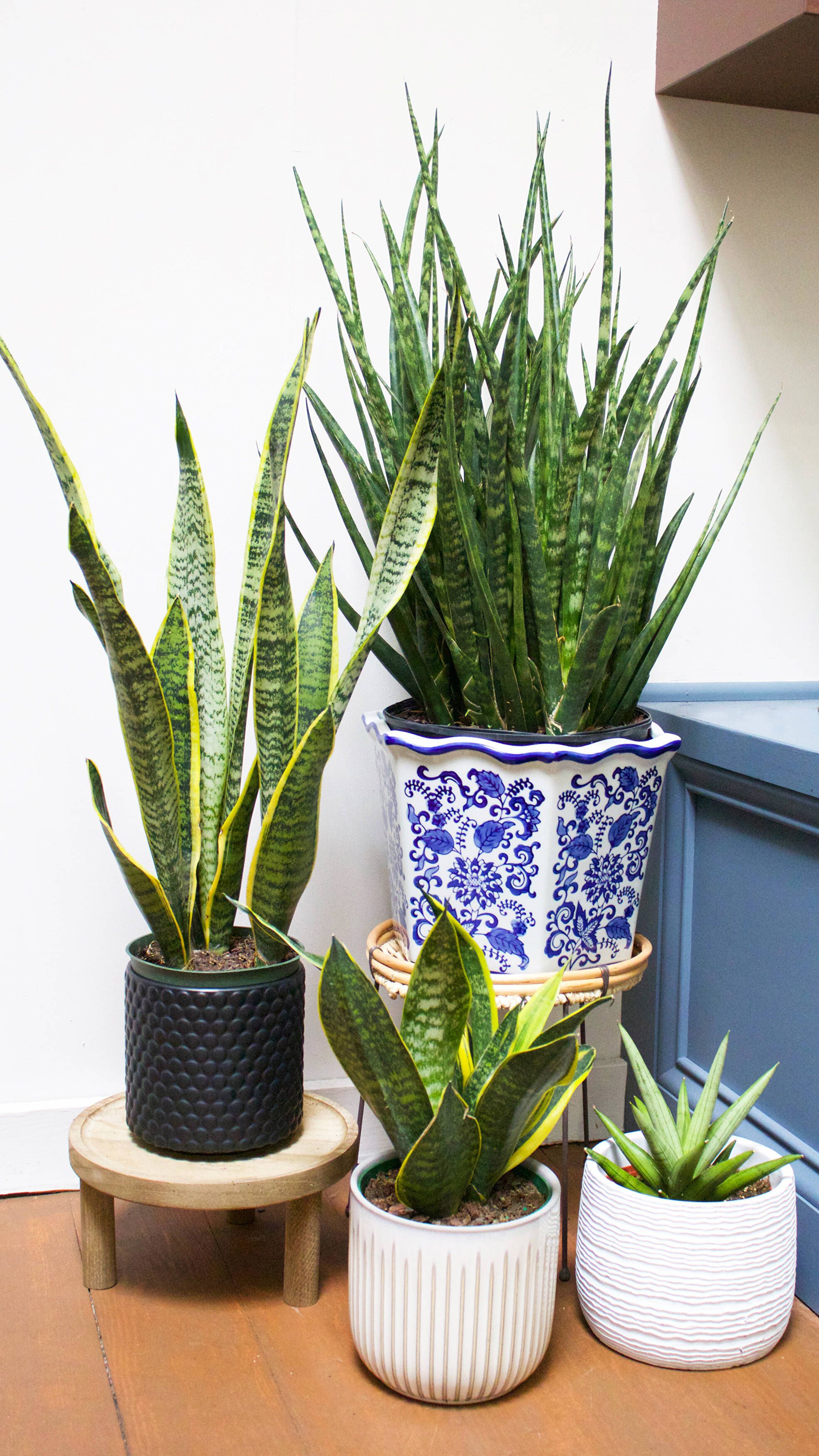
The Snake Plant, also known as Mother-in-Law's Tongue or its scientific name, Dracaena trifasciata, is a classic houseplant celebrated for its striking, architectural leaves. With its upright, sword-like foliage and diverse patterns, it adds a fun touch to any room. One of the main reasons for its popularity is its reputation as an almost indestructible plant, making it a perfect choice for beginners or those who may not have a green thumb. Snake plants are also well-known for their ability to purify the air, removing toxins from your indoor environment. At Over Grown, we have a stunning selection of Snake Plants and our team would love to help you find the perfect one for your space.
Snake Plant Lighting
Native to West African tropical regions, the snake plant is incredibly adaptable to a variety of light conditions.
- Ideal light conditions: These plants are great because they can tolerate lower light, however, they thrive in bright, indirect light. More light will encourage faster growth and more vibrant leaf colors.
- Avoid: Although they are tough, prolonged, harsh, direct sunlight can scorch the leaves. Too little light will slow down growth and can cause the variegation to fade.
- Signs of improper light: Leaves that look washed out or have brown, crispy tips can be a sign of too much direct sun. Thin growth and a lack of new leaves can indicate insufficient light.
Snake Plant Watering
Snake plants are succulent-like and can be susceptible to root rot. Overwatering is the most common mistake made with these plants.
- How often to water your Snake Plants: Water when the soil is completely dry. The frequency will vary depending on your home's environment and the pot size, but it's often every 4 weeks with increased frequency for brighter light placement. In the winter, you can water even less frequently since the soil may dry slower. When in doubt, it's always better to let it dry out longer than to overwater.
- Potting advice: Use a pot with proper drainage. These plants do not like sitting in soggy soil.
Snake Plant Humidity
Snake plants are highly tolerant of average indoor humidity levels and do not require any special treatment. In fact, they can even pretty tolerate dry air. No need to increase humidity for them!
Snake Plant Soil and Fertilization
- Potting medium: A chunky and well-draining soil mix is essential to prevent root rot. We use and recommend Rosy Soil's Cacti & Succulent mix, which can be found in-stores. Check out our blog All About Rosy to learn more about Rosy Soil.
- Fertilizing: During the growing season (spring and summer), you can apply a diluted, balanced liquid fertilizer every 2-4 weeks. You can slightly reduce fertilizing during the fall and winter. For a simple way to feed your plant, check out our liquid fertilizer drops. They're available in-store and are perfect for consistent, healthy growth.
Snake Plant Leaves Floppy or Squishy
- Causes: This is the most common sign of overwatering and root rot.
- Solutions: Stop watering until soil is completely dry. Check the roots for rot (they will be dark and mushy if rotted). If there is rot, you may need to cut away the affected roots and repot into fresh, dry soil.
Snake Plant Browning and Crispy Tips
- Causes: This is usually a sign of underwatering or, less commonly, too much direct sunlight.
- Solutions: Ensure you are watering thoroughly when the soil is completely dry. You can also check your lighting situation to make sure it is not receiving too much direct sun.
Snake Plant Pests and Treatment
- Common Snake Plant pests: Snake plants are quite pest-resistant, but they can occasionally attract mealybugs or spider mites, especially in poor conditions.
- Treatment: For infestations, wipe leaves with a damp cloth and apply an insecticidal soap or a neem oil solution. We recommend our organic pest treatment that you can find in-store to keep infestations at bay and prevent future outbreaks.
To learn more about houseplant pests, visit our blog, Identifying and Treating Houseplant Pests. Still struggling to figure out what's wrong with your plant? Sometimes a little expert guidance makes all the difference. Stop by Over Grown for a plant consultation, and we'll help get your plant back on track.
A Summary Key recommendations for new Snake Plant owners:
- Lighting: Bright, indirect light is best, but they are very forgiving.
- Watering: Let the soil dry out completely between waterings.
- Patience: Snake plants are slow growers, but they are incredibly resilient.
As always, our in-store employees are always available to provide personalized guidance and assistance with your plant care questions. We hope this guide helps your Snake Plants thrive!
If you're looking for more expert advice, exclusive content, and a community of fellow plant lovers, be sure to sign up for the Over Grown newsletter below.