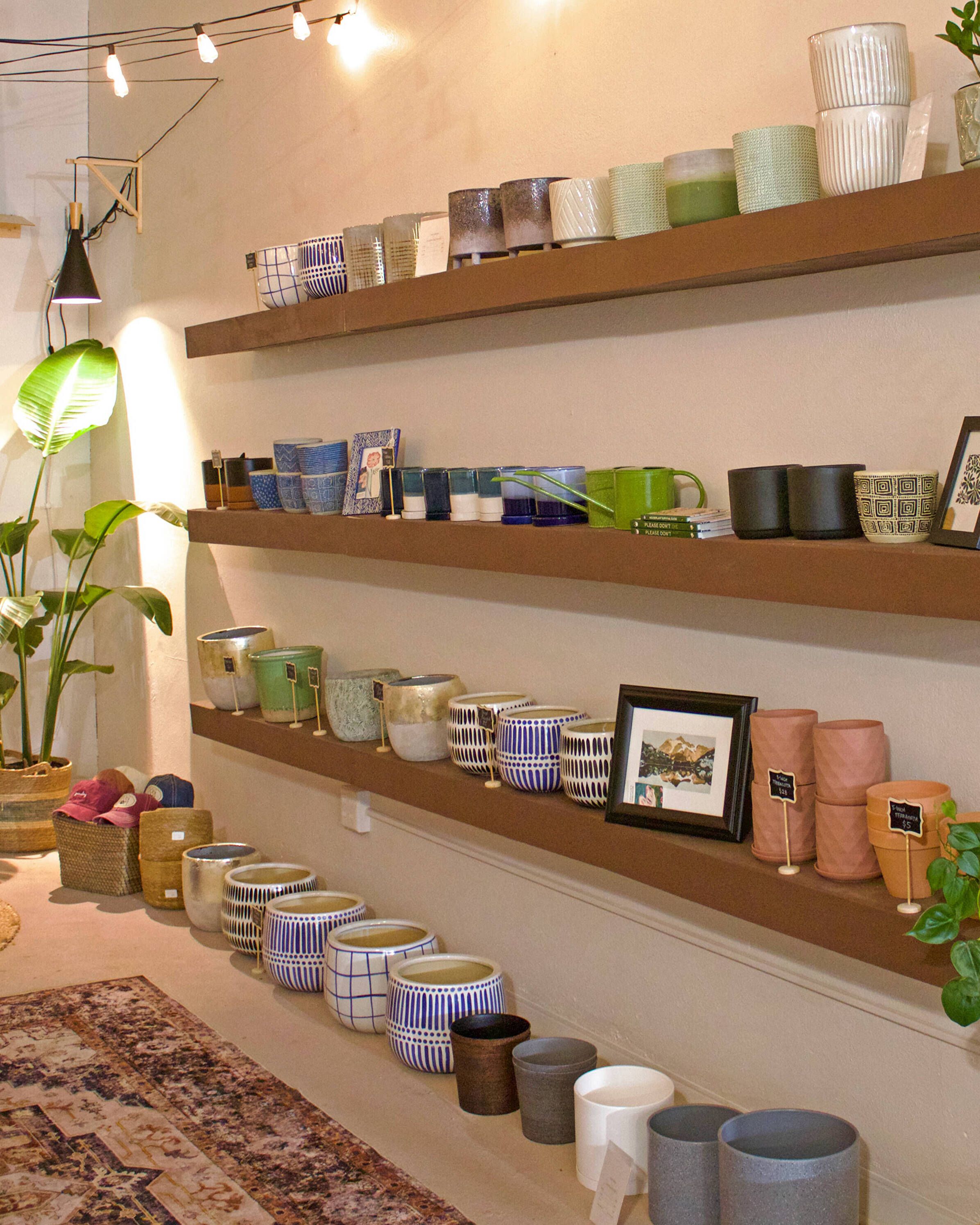
Choosing the right pot is a crucial step in ensuring your plant's health and longevity. The pot's material, size, and drainage all play a significant role in its growth. A well-chosen pot can replicate a plant's natural environment and prevent common issues like root rot. At Over Grown, we have a wonderful variety of pots to go alongside your new plants in-store and would love to have you in to check them out.
Pot Sizing
- The Right Fit: A plant should be in a pot that is proportional to its size. A pot that is too large can hold excess moisture, leading to root rot, while a pot that is too small can stunt growth.
- Repotting: When a plant outgrows its current container, it's time to repot. A good rule of thumb is to choose a new pot that is only 1-2 inches larger in diameter than the old one. This provides enough space for new growth without overwhelming the plant.
- Signs of a Bad Fit: If a plant's roots are circling the bottom of the pot or growing out of the drainage holes, it's a clear sign that the pot is too small. On the other hand, a pot might be too big for a plant when it holds significantly more soil than the root ball can occupy.
Pot Materials
- Terra Cotta: These pots are porous and allow for excellent air circulation and help the soil dry out faster, which is great for plants that prefer drier conditions. However, this also means they require more frequent watering.
- Plastic: Plastic pots retain moisture longer, which is ideal for plants that need consistent moisture. They are lightweight and often inexpensive, but their non-porous nature can increase the risk of root rot if not monitored carefully.
- Ceramic: Glazed ceramic pots are less porous than terra cotta and retain moisture well, similar to plastic. They are often heavier and come in a variety of decorative styles.
Drainage
- Importance of Drainage Holes: All pots should have at least one drainage hole at the bottom. This allows excess water to escape, preventing the soil from becoming waterlogged and causing root rot. If you have a pot with no drainage that you would still like to use, use it as a cover pot! You can always stick a nursery pot inside of a decorative pot.
- Watering and Drainage: When you water your plant, you should see water drain out of the bottom of the pot. This indicates that the plant is receiving a thorough watering and the excess is being removed.
Soil Not Drying Out
- Cause: If your soil is consistently staying too wet, it may be due to a pot that is too large or a pot material that is retaining too much water.
- Solution: Consider repotting the plant into a smaller pot or one made of a more porous material like terra cotta.
Root Rot
- Cause: This is a common issue caused by a lack of drainage and overly moist soil. The symptoms include yellowing leaves and a soft, mushy stem.
- Solution: Immediately repot the plant, trimming away any rotted, dark-colored roots. Ensure the new pot has proper drainage.
Stunted Growth
- Cause: A pot that is too small can restrict root growth and prevent the plant from thriving.
- Solution: Move the plant to a larger pot that provides ample space for the roots to grow.
- Sizing: Choose a pot that is proportional to your plant. When repotting, only go up one size.
- Material: Consider terra cotta for plants that prefer to dry out, and plastic or glazed ceramic for plants that need to stay consistently moist.
- Drainage: Always choose a pot with a drainage hole to prevent root rot.
As always, our in-store employees are always available to provide personalized guidance and assistance with your plant care questions. We carry pots varying in sizes, materials, and designs, perfect for any plant lover.
We hope this guide helps with all your future repottings! If you're looking for more expert advice, exclusive content, and a community of fellow plant lovers, be sure to sign up for the Over Grown newsletter below.