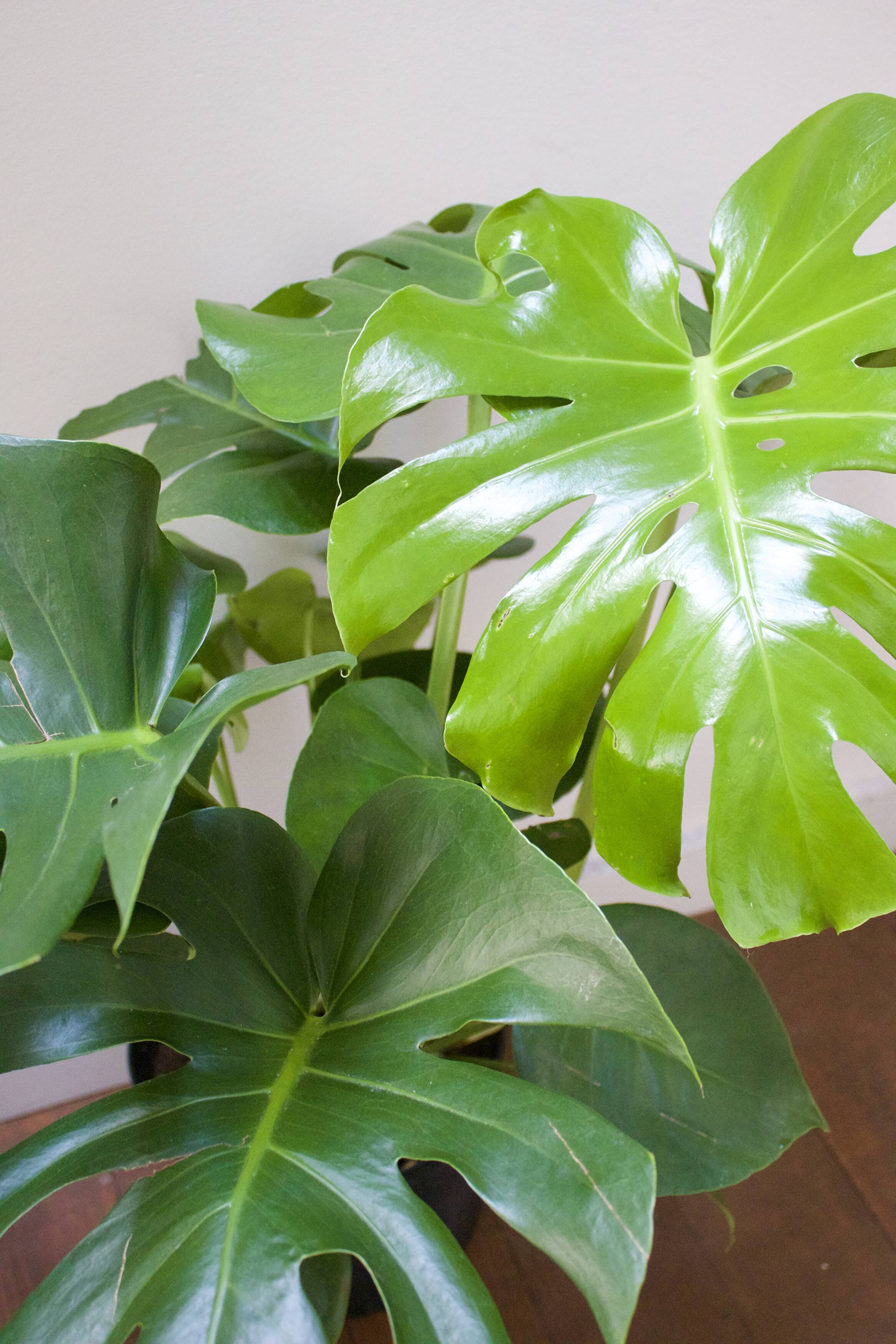
If your Monstera Deliciosa is starting to outgrow its space or is looking a little unruly after a long winter, now is the time to act. Spring is the best time for propagation in Ohio because the increasing daylight hours and natural growth surge give your cuttings the fuel they need to push out roots faster than any other time of year. Don’t know where to start with tackling this process? Here’s everything you need to know.
Before you make the first snip, gather your kit. You don’t need much, but having the right tools makes the process seamless.
- Sharp, Sanitized Shears: Clean them with rubbing alcohol to prevent any bacteria from entering the parent plant.
- Vessel/Jar: Being able to see the root development is helpful, opt for a glass jar if you have one, but just about any container to be used for your propagation.
- Water: For this method of propagating you’ll need water to fill your vessel/jar.
- Rooting Hormone (Optional): Not strictly necessary for Monsteras, but it can speed up the process if you’re impatient.
The most common mistake in propagation is cutting a leaf without a node. A node is the "knobby" joint on the main stem where a leaf, aerial root, or branch attaches. This is where the undifferentiated cells live that will eventually become new roots.
Where to find it: Look for a thick, brown bump (an aerial root) or a slightly swollen "ring" on the stem. Your cut must be made below this point. If you only cut a leaf and its long stem (petiole) without a piece of the main trunk, it might stay green in water for months but will never grow roots.
Water propagation is the most popular method because it’s low-maintenance and simple. It is also visually very satisfying to watch as the roots come in.
- Identify your node and cut about an inch below it at a 45-degree angle. This increases the surface area for water intake.
- Let the cutting sit out on the counter for about 20–30 minutes to callous over a bit. This allows the "wound" to dry slightly, reducing the risk of rot.
- Place the cutting in your container of choice. Ensure the node is submerged, but try to keep the leaf itself out of the water.
- Put your jar in a spot with bright, indirect light. A North or East-facing window in your Columbus home is perfect right now.
- For maintenance, change the water every 7-10 days. Fresh water provides the oxygen roots that are needed to stay healthy.
Shop Propagation Supplies: Need the perfect glass vessel or some high-quality shears? Swing by our Westerville or Dublin shops to grab everything you need to start.
While water is easier to monitor, you can also propagate by putting a cutting straight into soil. This is a great option if you want the plant to develop "soil roots" immediately, which are sturdier than "water roots." Use a light, airy mix and keep it consistently moist, but never soggy, until the plant is established.
- Cutting Too Deep: Leaving too much stem below the node can lead to rot before roots form.
- The Node-less Leaf: Cutting a leaf with no node. It looks pretty, but it won’t root.
- Low Light: Cuttings need light to produce the energy required for root growth.
The most frequent question we get is: "when is it ready for soil?" A good rule of thumb is the 2-inch rule. Once your primary roots have secondary roots (little branches coming off the main root) and they are at least 2 inches long, your Monstera is ready to be potted in a well-draining mix. We carry a tropical houseplant mix in store that is perfect for this, and will provide just what your plant needs to get established.
Right now, our local humidity is finally hitting that 50-60% range that Monsteras love. In the winter, our furnaces dry out the air to 10-20%, making propagation a little bit of a slower process. Take advantage of this window!
1. How long does it take to see roots?
Usually 2 to 4 weeks in the spring, depending on the light levels in your home.
2. My cutting is turning black at the bottom. What do I do?
This is rot. Trim the black part off back to healthy tissue, change the water, and consider adding a small drop of hydrogen peroxide to the jar.
3. Will the new plant have the same "holes" (fenestrations) as the leaf I cut?
The first few leaves on a new cutting often revert to a more juvenile, solid shape while the plant focuses its energy on building a root system. Once it's established in soil, the large, split leaves will return!
4. Does the parent plant grow back where I cut it?
Yes! Usually, a new axillary bud will activate near the cut, and the parent plant will continue growing from that new point.
5. Do I need to use fertilizer in the water?
Unless you plan to leave the cutting in water for a long period of time instead of transferring to soil, the answer would be no. The cutting has enough stored energy to produce initial roots. Save the fertilizer for when it’s in soil.
We hope this guide helps you feel confident enough to start propagating your own Monstera Deliciosa! For more general propagation tips, check out our previous blog, "Plant Propagation for Beginners." If you're looking for more expert advice, exclusive content, and a community of fellow plant lovers, be sure to sign up for the Over Grown newsletter below.