It can be quite disheartening discovering unwelcome visitors on your beloved houseplants. Pests are an inevitable part of plant parenthood, but identifying them early and knowing how to treat them can save your plants from significant damage. At Over Grown, we believe that a little knowledge goes a long way in keeping your leafy companions healthy and thriving. Let's dive into the most common houseplant pests and how to get rid of them!
Before we get into specific pests, here are some universal strategies that will help you prevent and treat infestations:
- Regular Inspection: Make it a habit to check your plants weekly. Look at the tops and undersides of leaves, stems, and even the soil surface. Early detection is crucial!
- Quarantine New Plants: Always isolate new plant arrivals for at least 2-4 weeks. This prevents any hitchhiking pests from spreading to your existing collection.
- Good Plant Hygiene: Remove any dead or decaying leaves, as these can attract pests. Wipe down dusty leaves; clean leaves are healthier leaves.
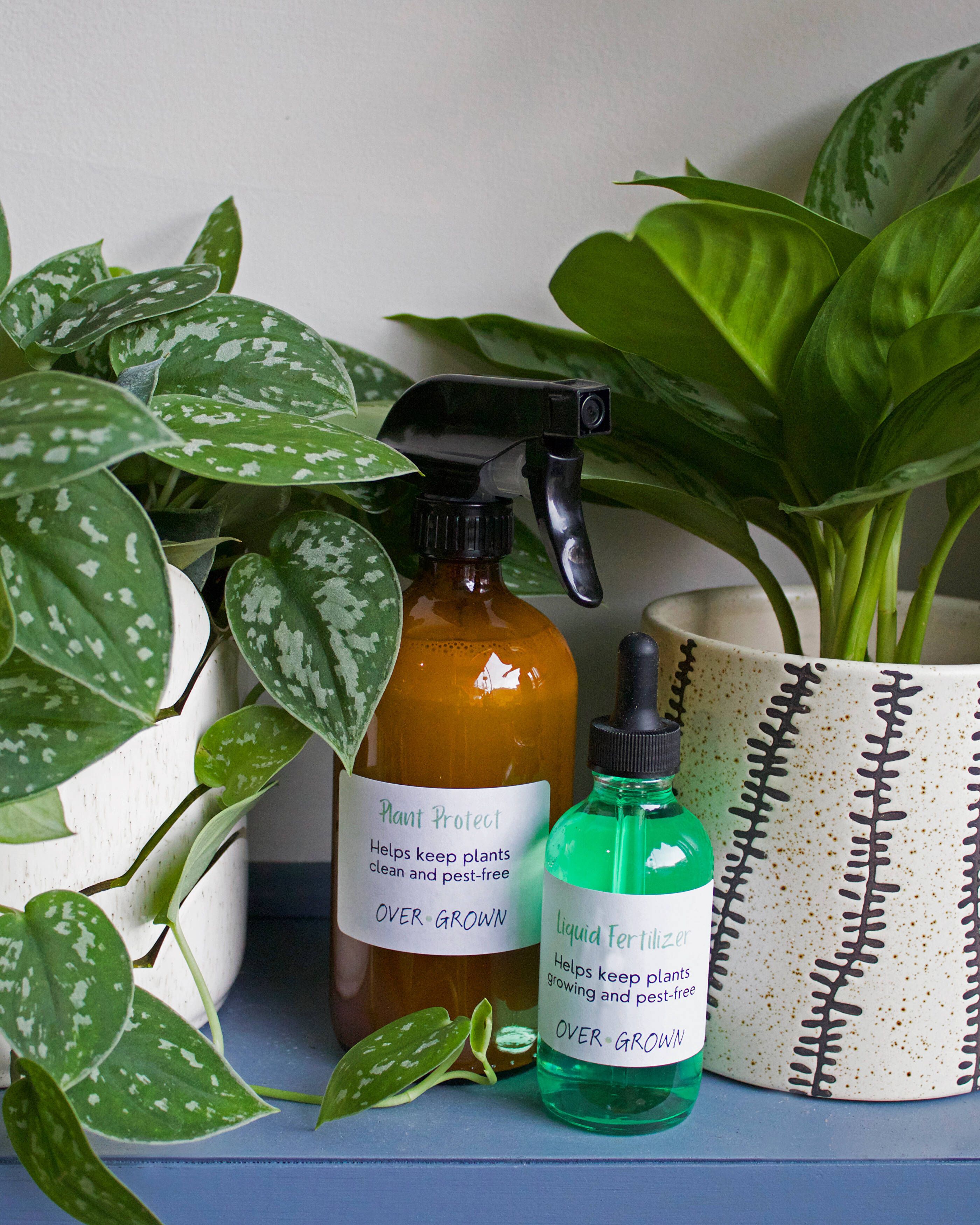
- Know Your Tools: Keep a few essential pest-fighting tools on hand, such as pest prevention sprays, rubbing alcohol, and a soft cloth. We recommend and use our plant protect which you can find in our stores!
Spider Mites
How to Identify:
- These tiny bugs are often hard to see with the naked eye. Look for:
- Fine webbing: Particularly in the crooks of stems and on the undersides of leaves.
- Tiny speckles: Yellow or brown dots on leaves, where they have been feeding.
- Overall dullness: Leaves may lose their vibrant color and appear dusty.
Treatment:
- Shower your plants: Isolate the plant and give it a thorough shower, using a strong stream of water to dislodge as many mites as possible. Pay close attention to the undersides of leaves.
- Spray them down with treatment: After showering, use our plant protect or treatment of your choice. Repeat every 5-7 days for 2-4 weeks to break their life cycle.
- Humidity: Spider mites thrive in dry conditions. Increasing humidity around your plant can help deter them.
Mealybugs
How to Identify:
- Mealybugs are distinctive and relatively easy to spot.
- White, cottony bugs: Often found in leaf axils (where the leaf meets the stem), along stems, and on the undersides of leaves.
- Sticky residue: A clear, sugary substance they excrete, which can also lead to sooty mold on the soil.
Treatment:
- Alcohol Swabs: For light infestations, dip a cotton swab in rubbing alcohol and directly touch each mealybug to dissolve its protective waxy coating.
- Spray them down with treatment: After removing the visible bugs, use our plant protect or treatment of your choice. Repeat a couple times to make sure they are gone. Make sure to also spray the soil!
Aphids
How to Identify:
- Small, soft-bodied insects, typically green or black.
- Clusters on new growth: They often congregate on tender new leaves and stems.
- Distorted growth: New leaves may appear curled or stunted.
- Sticky honeydew: Similar to mealybugs, they excrete a sticky residue.
Treatment:
- Rinse Off: A strong spray of water can effectively dislodge aphids from the plant.
- Spray them down with treatment: Apply thoroughly, ensuring direct contact with the pests. Aphids reproduce quickly, so consistent treatment is key.
Fungus Gnats
How to Identify:
- These guys are more annoying than harmful to your plants.
- Small, black, flying insects: Often seen hovering around the soil surface or flying near your plants, especially when disturbed or being watered.
Treatment:
- Avoid wet, soggy soil: Fungus gnats thrive in moist soil. Allow the top of the soil to dry out between waterings.
- Sticky Traps: Yellow sticky traps placed near the plant will catch adult gnats, reducing their population. We carry these in-stores and are super easy to use.
- Spray the soil with treatment: Apply thoroughly to the top of the soil to help prevent the gnats from reproducing in the soil.
Thrips
How to Identify:
- Slender, tiny insects (often black or tan) that can jump or fly.
- Silvering or streaking on leaves: Caused by their feeding habits.
- Black specks: Their droppings can be seen on the leaves.
- Distorted new growth: Similar to aphids, new leaves may appear deformed.
Treatment:
- Systemic Insecticide: Thrips are notoriously difficult to control with contact sprays alone due to their life cycle (they pupate in the soil). A systemic insecticide is often the most effective.
- Spray them down with treatment: Regular, thorough applications can help reduce populations, but consistency is vital.
- Pruning: Remove heavily infested leaves and dispose of them far away from your plants.
Sometimes, pests can be persistent, or you might be unsure what exactly is bugging your plant. Don't worry, we are here to help and would love to help you determine if you have pests, as well as how to get rid of them as well as help keep future infestations at bay.