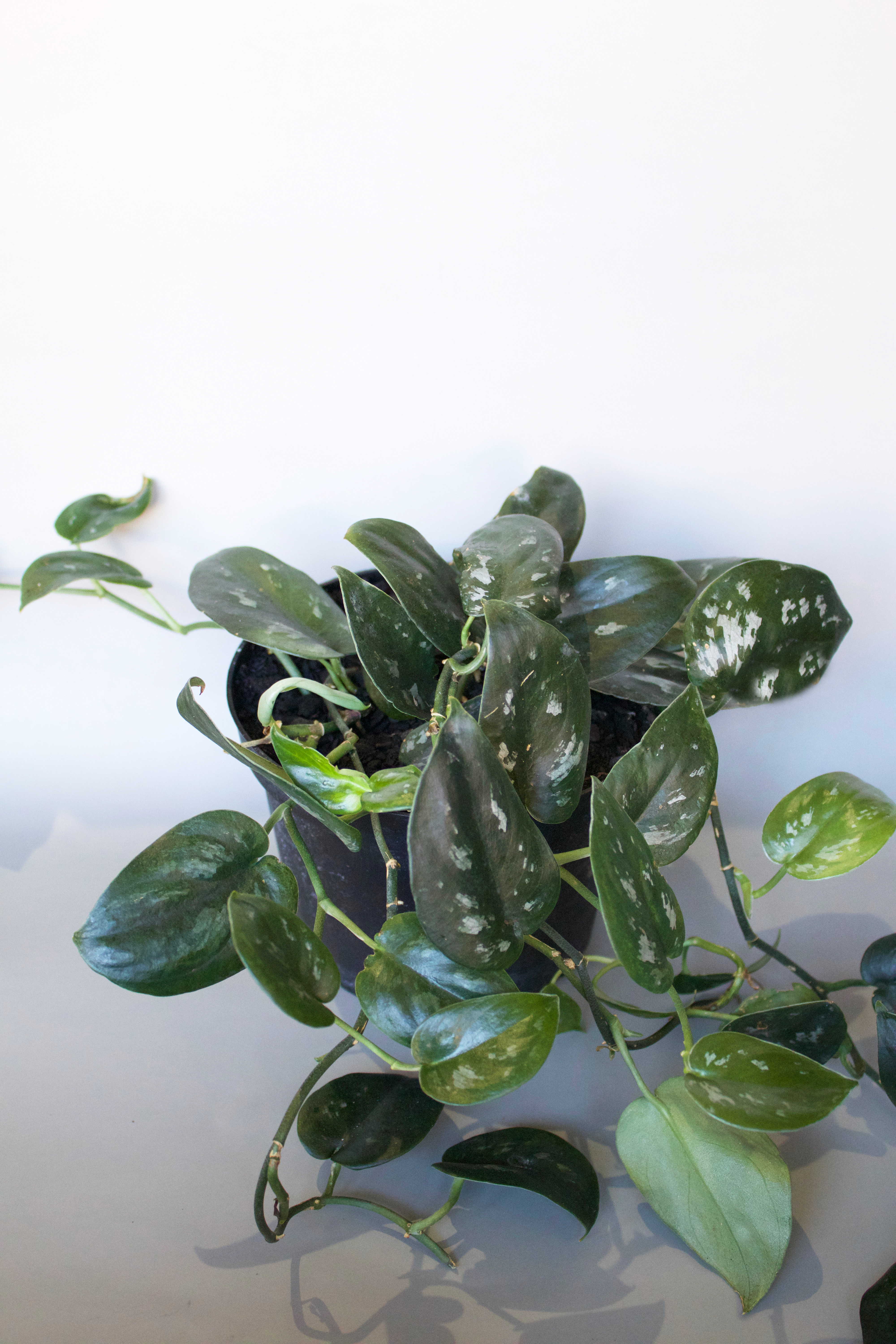
We’ve all been there: you buy a trailing plant dreaming of a lush, overflowing plant, but six months later you’re left with it starting to look a bit straggly. It might just have one or two thin vines stretching several feet toward the floor while the top of the pot looks sparse. The instinct is usually to chop and propagate, but there is another option/ hack that keeps your vines intact while doubling the density of your plant. It’s called pinning, and it’s the easiest way to transform a leggy plant into a lush plant again.
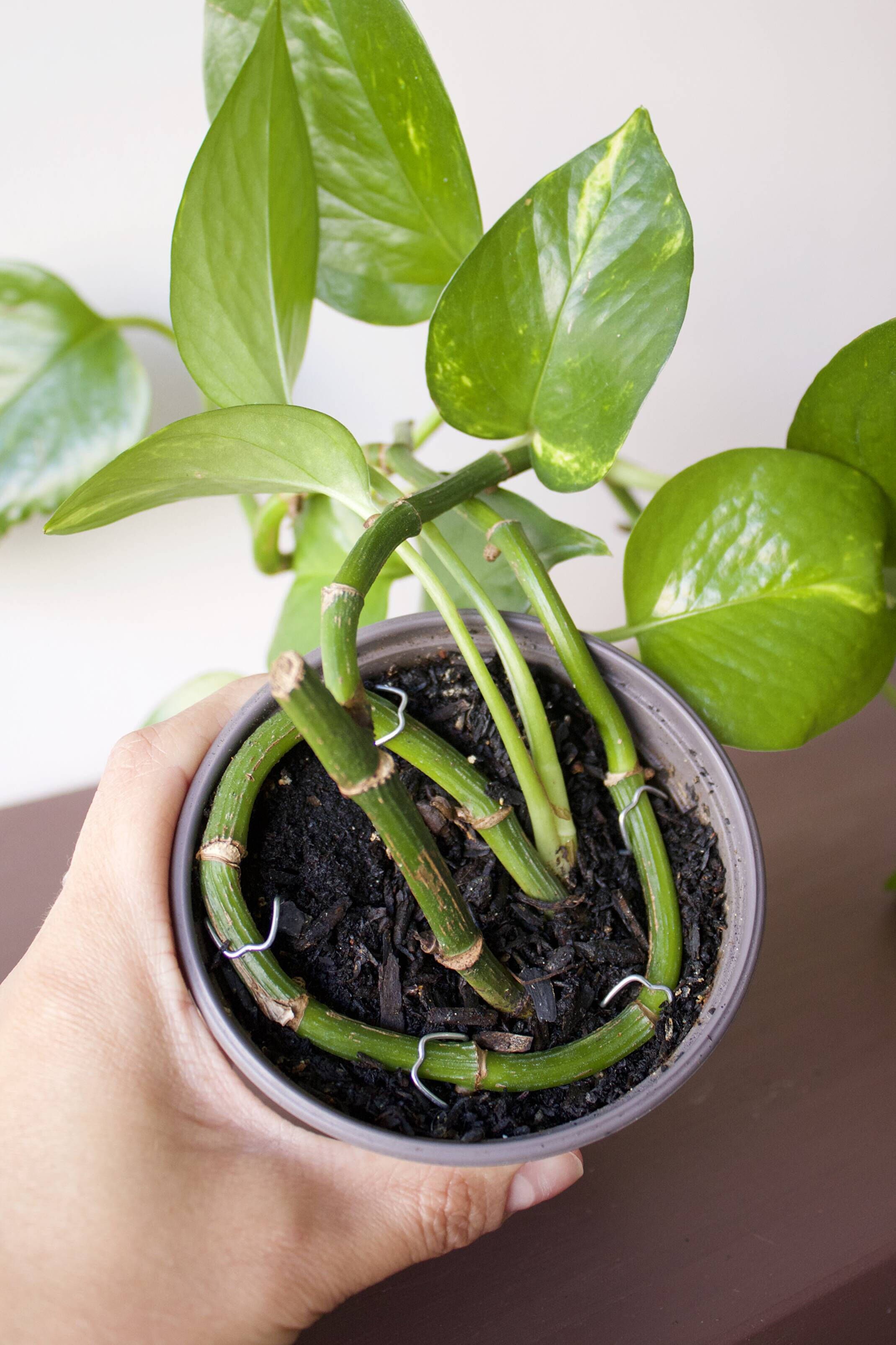
While propagation involves cutting the vine to start a brand-new plant, pinning keeps the vine attached to the mother plant. You are simply taking a long runner, looping it back into the top of the pot, and securing a node directly onto the soil.
Because the vine is still connected to the main root system, it has a constant energy supply. This allows the pinned node to grow roots much faster and more reliably than a water cutting. Once those new roots take hold, the plant often activates new growth points along the vine, filling in the top of your pot without you ever having to pick up a pair of shears.
This method works best for plants that grow adventitious roots at their nodes. The best three options for pinning are:
- Pothos: Any variety of these works amazing with this method.
- Heartleaf Philodendron: Perfect for filling in those thin spots near the soil.
- Scindapsus: Known for being slightly slower to root in water, these do exceptionally well with soil-contact pinning.
- Identify the Node: Look for the small brown bumps or "joints" along your trailing vine. These are the nodes where roots will form.
- Prep the Soil: Gently loosen the top half-inch of soil in the bare spots of your pot. Ensure it’s slightly damp so the new roots have a welcoming environment.
- The Placement: Take a long vine and loop it back toward the soil. Press a healthy node firmly against the dirt.
- Secure the Pin: Place your pin directly over the stem, straddling the node. Push it into the soil at a slight angle until the node is held snugly against the surface. Do not pierce the stem, the pin should act like a staple holding it down.
- Maintain Contact: Ensure the node stays in direct contact with the soil. If it lifts up, it won't root.
Shop the Essentials: Looking for the perfect trailing Philodendron or professional-grade U-pins? Visit us in the shops to grab everything you need to start incorporating this into your collection today!
You don't need anything high-tech, but the right pin makes a difference:
- U-Pins: These are the gold standard. They are sturdy, and the perfect width for most stems on your houseplants.
- Bobby Pins: A classic household hack. Just pull them slightly wider before pinning.
- Landscape Pins: Great for larger, thicker stems you might find on a more mature houseplant.
Once pinned, treat the plant as usual, but try to keep the top layer of soil where the nodes are pinned slightly more humid (a light misting every few days helps). In 2-4 weeks, you should feel resistance if you gently tug the vine, that means roots have formed! Within a month or two, you’ll likely see brand-new vines emerging from those pinned points.
1. Does pinning hurt the plants stems?
Not at all! You aren't cutting or piercing the plant. You are simply encouraging it to do what it does in nature: crawl across the ground and root as it goes.
2. Can I pin multiple nodes at once?
Yes! If you have a very long vine, you can "snake" it around the top of the pot and pin several nodes down. Just make sure each pinned node has good soil contact.
3. When can I remove the pins?
Once you see new growth emerging from the pinned node, or if the vine feels firmly "locked" into the dirt when you give it a tiny tug, you can safely remove the pin and reuse it elsewhere.
We hope this guide gave you the confidence to try this with your own collection! As always, our in-store employees are also available to provide personalized guidance and assistance with your plant questions. If you're looking for more expert advice, exclusive content, and a community of fellow plant lovers, be sure to sign up for our newsletter below!