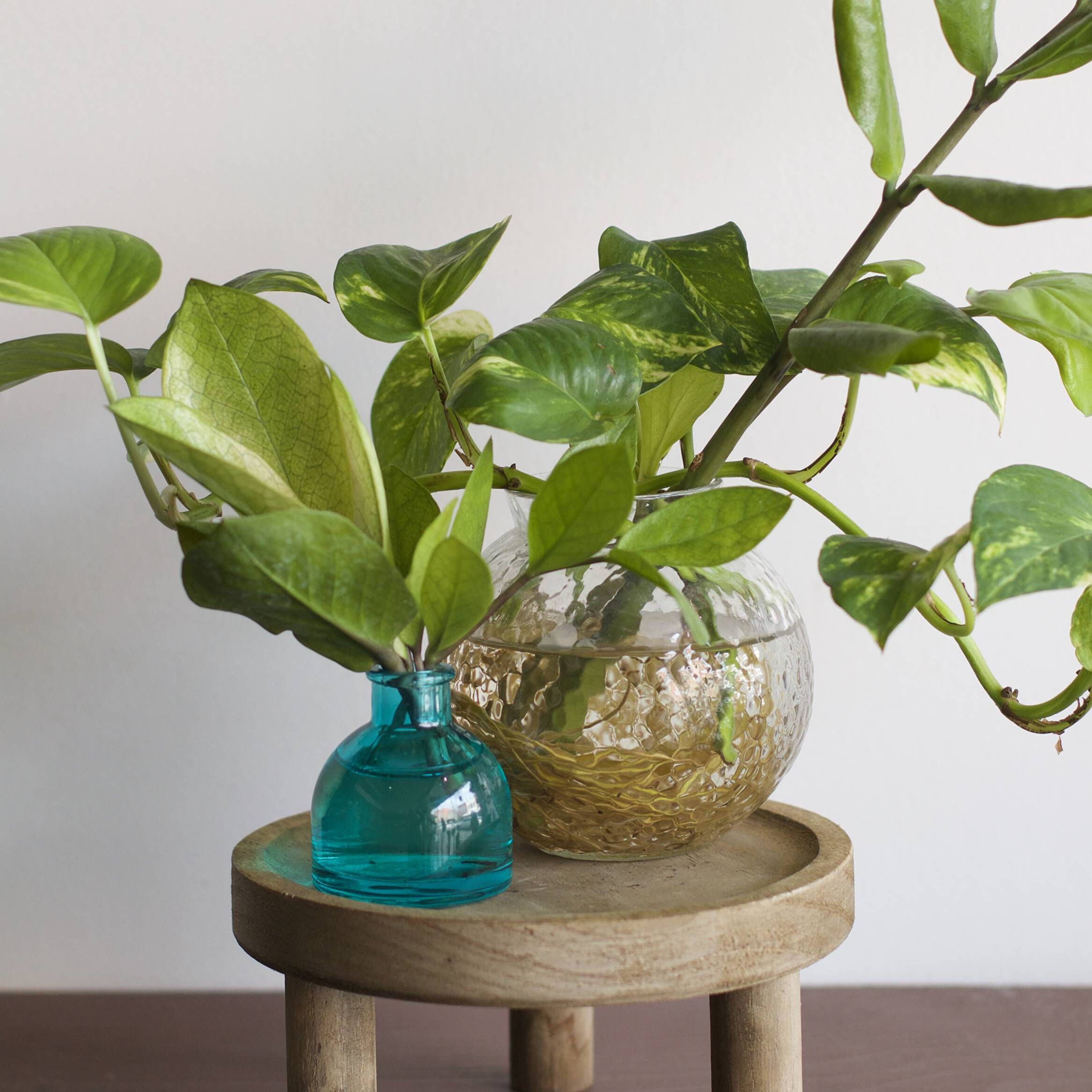
Have you ever looked at your thriving plants and wished you had three more just like it? Or maybe a friend has a rare plant and you’re dying for a piece? Welcome to the world of propagation!
If you’re wondering how to propagate plants, you’re essentially learning the "copy and paste" of the plant world. Propagation is the process of creating new plants from a variety of sources: seeds, cuttings, or other plant parts. For indoor gardeners, it is one of the most rewarding skills you can master. Not only does it save you money, but it also allows you to share your favorite varieties with friends and family.
Before you grab your shears, you need to know where to look. The most important term in plant propagation for beginners is the node.
A node is the little "bump" on a stem where leaves, aerial roots, or branches grow. This is where the plant's growth cells are concentrated. If you take a cutting of just a leaf with no node, it might stay green in water for a while, but it will never grow roots. To successfully propagate houseplants, you must include at least one node in your cutting.
There are several ways to multiply your collection, depending on the type of plant you have:
- Water Propagation: The most popular method for beginners. You place a cutting in water and wait for roots to sprout. It’s visual, easy, and works for most vining plants.
- Soil Propagation: Placing a cutting directly into moist soil. This is often used for succulents or more "woody" plants.
- Division: Separating a plant into two or more parts by the root ball. This is best for plants that grow in clumps, like Peace Lilies or Snake Plants.
- Leaf Cuttings: Certain plants, like Sansevieria or Peperomia, can grow entire new plants from just a portion of a leaf.
Ready to try it? Let’s walk through the most common method: water propagation step by step. In this example, we will use a vining plant (pothos, monstera, etc)
- Select a Healthy Plant: Always take cuttings from a healthy, pest-free plant.
- Locate the Node: Find a stem with a couple leaves. Identify the node (the bump) below the bottom leaf.
- The Cut: Using clean, sharp shears, cut about a half-inch below the node.
- Prep the Cutting: Remove the bottom leaf so the node is "naked." You don't want leaves sitting in the water, as they will rot.
- Water Setup: Place the cutting in a glass vessel, and fill it with room-temperature water. Ensure the node is submerged.
- The Wait: Place it in bright, indirect light. Change the water when it is not looking fresh anymore to keep it fresh and oxygenated.
- The Transition: Once the roots are at least 2 inches long, you can move it to soil!
Pothos: They root in water incredibly fast.
Heartleaf Philodendron: Very similar to Pothos, their nodes are easy to find and very reliable.
Tradescantia: These grow roots almost overnight.
Spider Plants: They grow "babies" on runners; just snip them off and put them in water.
ZZ Plant: You can propagate these by stem cuttings or even individual leaves (though it takes a while!).
Snake Plant: Can be divided at the root or grown from leaf cuttings in water.
Monstera Deliciosa: Grow thick roots and are incredibly satisfying.
Scindapsus Pictus (Satin Pothos): Similar to a Pothos but with thicker, velvety leaves that look stunning in a glass prop station.
Jade Plant: A great introduction to succulent leaf and stem propagation.
Maranta (Prayer Plant): Once you find the node, these trail and root beautifully in glass jars.
Don’t be discouraged if you have a "prop-fail." If your cutting is turning mushy or black, it’s likely root rot. This happens if the water is stagnant or if the cutting didn't have a node. Another common issue is lack of light, cuttings need energy to produce roots!
Troubleshooting Tips:
- No roots after 3 weeks? Move to a warmer spot or a brighter window.
- Algae in the water? Clean the jar and use fresh water more frequently.
- Cutting is wilting? Make sure the node is actually touching the water!
Once you master some of the easier forms of propagating, you can even try air layering (rooting a branch while it's still on the mother plant) or using sphagnum moss in a prop box. These are great for rarer, more expensive plants.
If you’re still looking for more tips and tricks, stop by one of our monthly plant swaps! It is a great opportunity to talk to us as well as other plant lovers in the community and get some great advice.
As always, our in-store employees are also available to provide personalized guidance and assistance with your plant questions. If you're looking for more expert advice, exclusive content, and a community of fellow plant lovers, be sure to sign up for our newsletter below!